
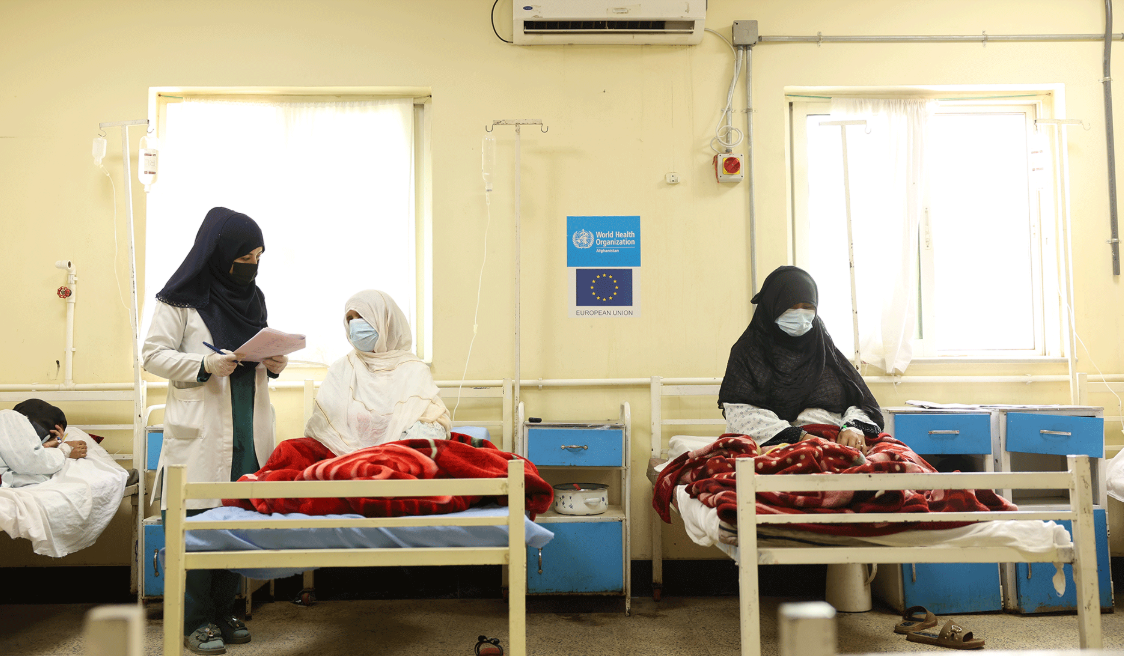
Thousands of people in northeastern Afghanistan are receiving free, specialized treatment for infectious diseases through the Kunduz Infectious Disease Hospital, supported by the World Health Organization (WHO) with funding from the European Union (EU).
Since April 2026, WHO support has helped the 50-bed hospital provide care for patients – including patients suffering from viral hepatitis, tuberculosis, acute watery diarrhoea and other serious infectious diseases – from Kunduz and neighbouring provinces.
In just six months, 27 745 patients, including 13 499 women, have accessed outpatient services. Another 2114 patients, including 1268 women, have received inpatient care. For families struggling with health care costs, the hospital offers much-needed relief and access to treatment closer to home.
The services it provides are essential in dealing with seasonal outbreaks of life-threatening infections.
Among those who have benefited is 55-year-old Abdul Ghafar, from Kuchi Gozar, about an hour drive from Kunduz city. When his health deteriorated due to hepatitis C his family feared for his life. He was rushed to the hospital where doctors admitted him to intensive care.
"I received regular medication, doctors visited me frequently, and my condition was monitored closely," he recalls. "The service was very good. My condition has improved and I am very happy with the health staff."
After six days of treatment and close monitoring, Abdul Ghafar had improved enough to return home to his family.
For Dr Ihsanullah Ihsan, Head of the Infectious Disease Hospital, stories like Abdul Ghafar's show why accessible, specialized care matters. He explains that free services spare families from incurring substantial treatment costs, and the availability of care closer to home helps reduce pressure on the Regional Hospital.
Access to female health workers is also important, particularly for women who may otherwise hesitate to seek care.