This is a summary of what was said by UNICEF Global Deputy Spokesperson, Ricardo Pires, to whom quoted text may be attributed – at today's press briefing at the Palais des Nations in Geneva
“In the last two weeks in Gaza, despite an agreed ceasefire, five boys and two girls have been reported killed and at least 33 children seriously injured in air strikes, drone strikes and gunfire across the Strip. Another two boys died of injuries sustained previously.
“And a little over one year on since the ceasefire was announced, more than 340 children have been reported killed and hundreds of others injured.
“Not least for the families mourning the loss of their children, those terrible statistics do not equate with a ceasefire as most would imagine one.
“A new UNICEF report, released today, lays bare the staggering human cost of a war that continues to devastate children, taking their lives, their childhoods, and their futures.
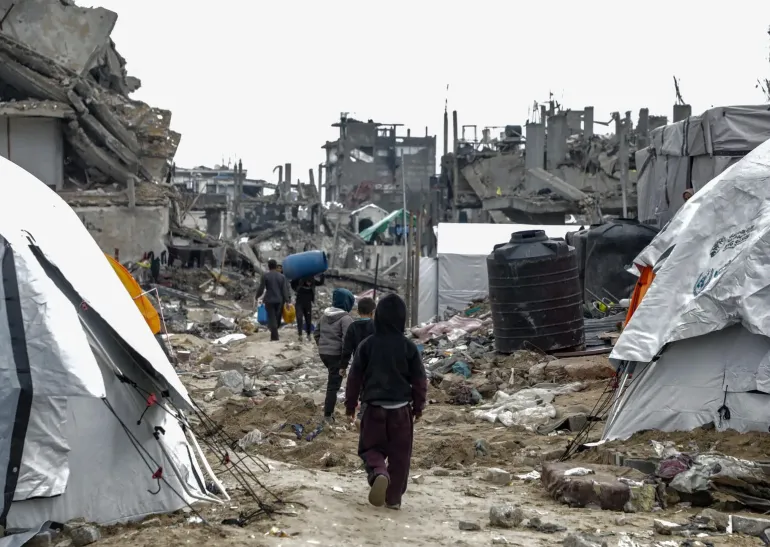
“Some 800,000 children are still displaced and most live in tents or dangerous bombed-out buildings.
“An estimated 60,000 children in Gaza have seen either one or both, parents, killed during the war, or since the ceasefire.
“Nearly every child needs some form of mental health support to recover.
“And now, as we once again approach winter, these children face a fourth year struggling to survive in dire conditions. Damaged tents, a lack of sanitation, and crowded together in whatever space families can find to create a makeshift home.
“While the cease-fire has allowed for more humanitarian assistance and commercial supplies to enter into the strip and the food security situation has improved, for children in Gaza, the consequences of war permeate every aspect of daily life: where they sleep, what they eat, whether they can learn, whether they feel safe enough to play, and whether the people they love are still by their side.
“Like for 16-year-old Norhan who my colleagues met recently. Her mum was shot while eight months pregnant. She delivered her baby and then died the following day.
“Norhan’s father is living with a disability, so she now cares for her one-year-old sister Narjis and takes full responsibility. Her days are spent tidying the home, cooking, and playing with Narjis. Her three other siblings attend a UNICEF-supported learning centre and Norhan helps them with their studies after class, which as she says means ‘They might just have a future.’
“Since the ceasefire, more than 560,000 children have returned to learning, including in over 200 UNICEF-supported learning centers. This year we’ve provided digital cash assistance – a lifeline - to more than 380,000 people, and we continue to supply safe water to 1.2 million people, while removing solid waste and delivering medical supplies.