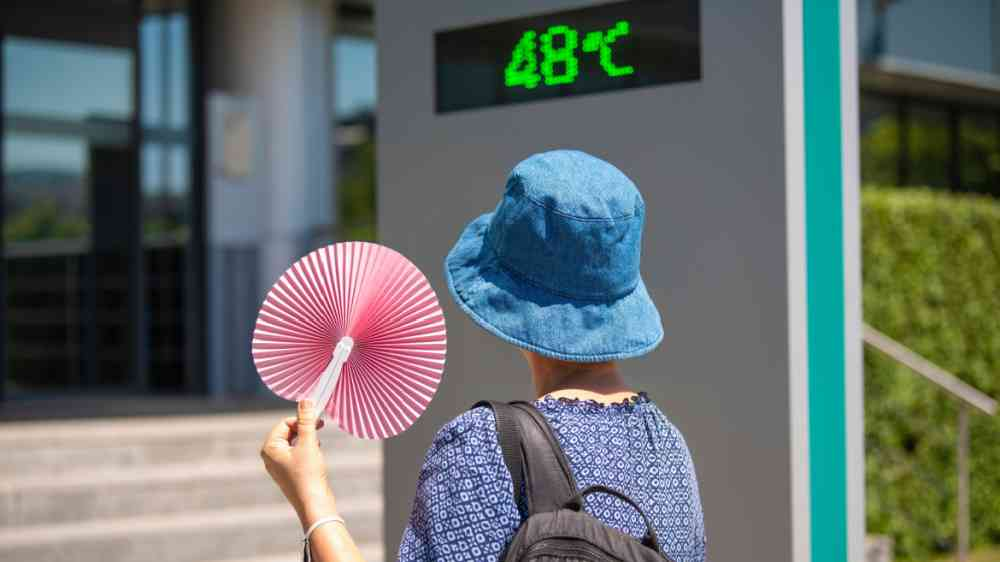
As the world faces record-breaking temperatures, a new Extreme Heat Risk Governance Framework and Toolkit was launched today at COP30 to help countries strengthen governance, coordination, and investment in response to escalating heat risks.
Developed by an international collaboration of national and global experts-led jointly by the UN Office for Disaster Risk Reduction (UNDRR), the World Meteorological Organization (WMO), the Global Heat Health Information Network (GHHIN), and Duke University-the Framework and Toolkit respond to the UN Secretary-General's Call to Action on Extreme Heat. The initiative recognizes that extreme heat has become one of the most deadly, economically and ecologically damaging, and least managed climate-related threats worldwide.
The Framework and Toolkit were unveiled at the high-level event "Extreme Heat Risk Governance: A New Framework and Toolkit for Accelerated Action" at COP30, hosted by Luxembourg with participation from Selwin Hart, Special Adviser and Assistant Secretary-General for Climate Action, Celeste Saulo, Secretary-General of WMO, Kamal Kishore, Special Representative of the UN Secretary-General for Disaster Risk Reduction, and representatives from national governments, development banks, city leaders, and international organizations including the Rockefeller Foundation, EBRD, and the CREWS Initiative.
Kamal Kishore, Head of UNDRR, underscored the significance of this milestone:
"The broad engagement in shaping this Framework underscores a critical understanding: integrated, multi-sectoral, and multi-scale extreme heat risk governance is no longer optional - it is essential for survival."