The eyes of the Burning Skies investigation’s reporters started to sting soon after they arrived in Afam-Ukwu, a village east of the city of Port Harcourt, Nigeria. Then came the mild dizziness, headaches, and pressure in the chest. For hours, they had difficulty breathing.
The air felt like a furnace fired by the flames shooting into the sky, day and night, from a former Shell facility on the outskirts of Port Harcourt. Locals said the reporters would get used to it, just as they had, even though some were paying the price with their health.
Across the Middle East and Africa, investigative reporters are connecting environmental degradation to the human toll on communities that live in the periphery of oil and gas facilities.
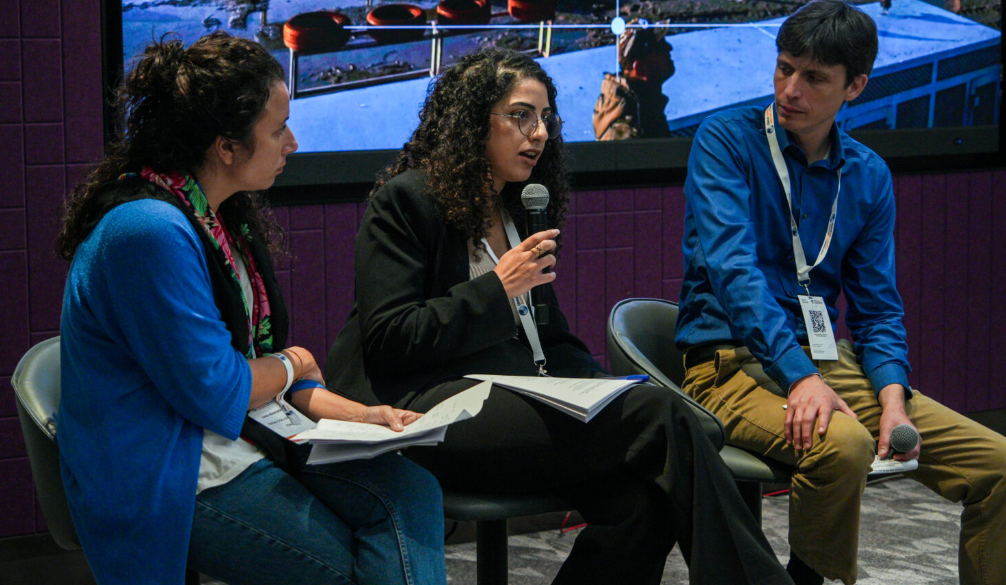
Through a combination of satellite data and health and scientific studies, supplemented with on-the-ground health reporting, these journalists suggest oil and gas industries are not only causing environmental degradation, but also shaping patterns of illness. The investigators shared tactics and lessons from their investigative work with delegates at an all-day workshop on how journalists can report on the intersections of climate change and public health at the kick-off of the 14th Global Investigative Journalism Conference (GIJC25) in Malaysia.
Burning Skies, a year-long cross-border, collaborative investigation revealed that companies, including BP and ExxonMobil, understated flaring emissions across Africa and the Middle East, obscuring damage to the environment and people’s health.
The Environmental Investigative Forum (EIF), European Investigative Collaborations (EIC), Daraj Media, SourceMaterial, Oxpeckers Center for Investigative Environmental Journalism, and nine other media partners spent more than a year analyzing flaring emissions in 18 countries from 2012 to 2023. JournalismFund, which supported the project, described it as the largest investigation on this topic to date. The investigation resulted in 26 stories published in multiple languages, including English, French, German, Arabic, and Italian.