
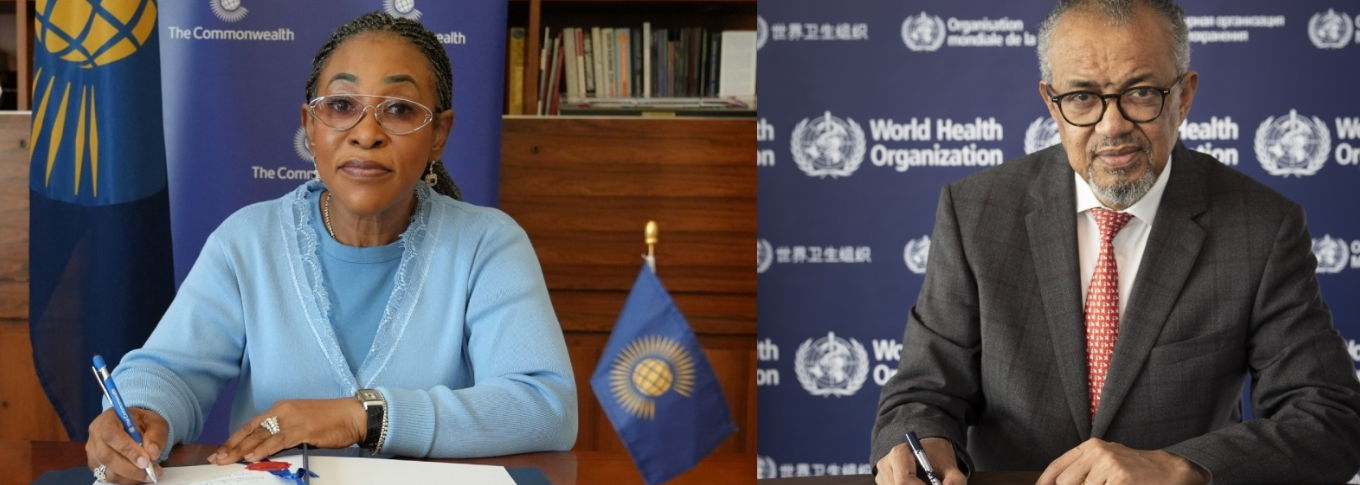
The World Health Organization (WHO) and the Commonwealth Secretariat today agreed to renew their Memorandum of Understanding (MoU) for four years, reaffirming their shared commitment to improving health and well-being across the Commonwealth’s 56 member countries, and strengthening collaboration to address pressing global health challenges.
The MoU was signed by the Secretary-General of the Commonwealth, Hon Shirley Botchwey, and the WHO Director-General, Dr Tedros Adhanom Ghebreyesus.
The renewed partnership reflects a shared vision to support Commonwealth member countries to build stronger, more resilient and more equitable health systems. Under the renewed MoU, the two organisations will deepen their cooperation in four priority areas:
As countries confront an unprecedented convergence of health emergencies, climate impacts, and persistent inequalities, the renewed partnership underscores the importance of coordinated international action to strengthen national health systems.
“This strategic partnership between WHO and the Commonwealth Secretariat has a dual purpose: to strengthen health systems for the long term while helping countries respond to urgent health threats,” said Dr Tedros. “By combining WHO’s technical expertise with the Commonwealth’s unique ability to convene leaders and drive collective action, we will be able to better support countries to protect health, advance universal health coverage, and build resilience for future generations.”