
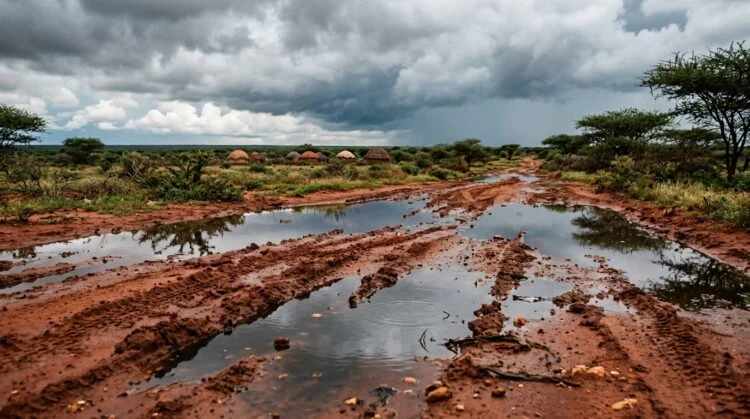
A severe surveillance discrepancy has left the vast majority of malaria cases in Somalia unrecorded, with routine national monitoring documenting only 32,983 confirmed cases in 2024 despite World Health Organization modeled estimates indicating an actual burden of approximately 1,012,760 infections. Writing in Clinical Infection in Practice, public health researchers emphasize that while seasonal rainfall predictably accelerates transmission across riverine basins, systemic gaps in surveillance and healthcare delivery obscure a more than thirtyfold gap between officially registered infections and the true scale of the epidemic.
Malaria transmission in Somalia is intimately linked to geography and hydrology, with the highest disease burden concentrating along the riverine regions of the south and center. The cyclical swelling of the Shabelle and Juba rivers during the Gu and Deyr rainy seasons transforms environmental shifts into predictable public health emergencies, mirroring dynamics observed in other malaria-endemic territories where seasonal moisture and human migration drive transmission. Across the country, Plasmodium falciparum constitutes the overwhelming majority of infections, accounting for more than 95 percent of all identified cases.