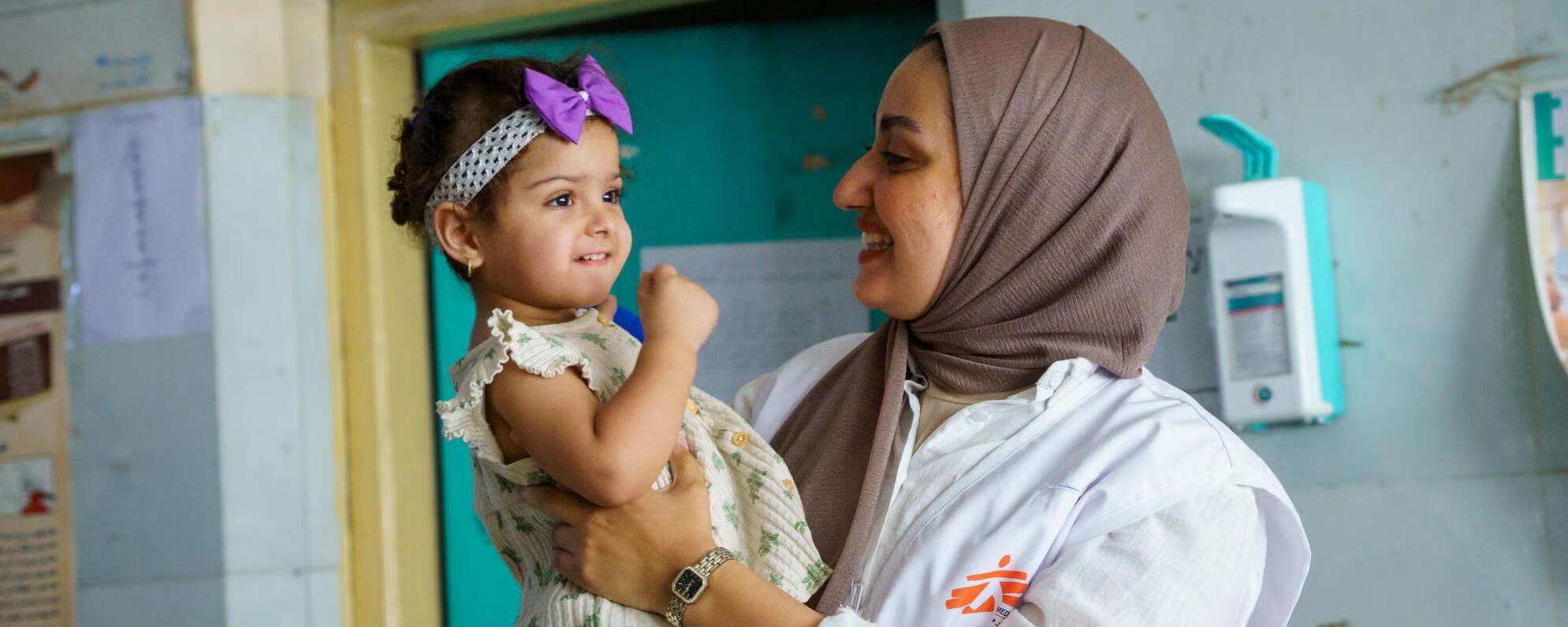
Umm Salam* sits on the ground outside her family’s home in Sadr City, a crowded district of Baghdad, Iraq. She holds her granddaughter Zainab* close, wrapped in her abaya as she recalls the child’s recovery from tuberculosis (TB).
Zainab’s family had received a call when her aunt was diagnosed with TB—part of a Doctors Without Borders/Médecins Sans Frontières (MSF) program for early TB detection among children, which has been carried out in collaboration with the Ministry of Health.
“They asked me to have Zainab tested because she had been very close to her aunt, who had pulmonary tuberculosis,” says Umm Salam.
Although Zainab did not have symptoms, she was tested for TB along with her four siblings. She was the only one who ended up testing positive for the disease, and she was then put on treatment while her siblings received preventive care.
“I cried a lot when I learned she had TB, but the doctor comforted me and assured me that recovery is possible,” says Umm Salam.
Feeling a mix of hope and fear, Umm Salam accompanied Zainab on trips between a health center and Ibn-Baladi Hospital, which became routine. Thousands of Iraqi families share similar stories of diagnosis and eventual recovery from TB.