
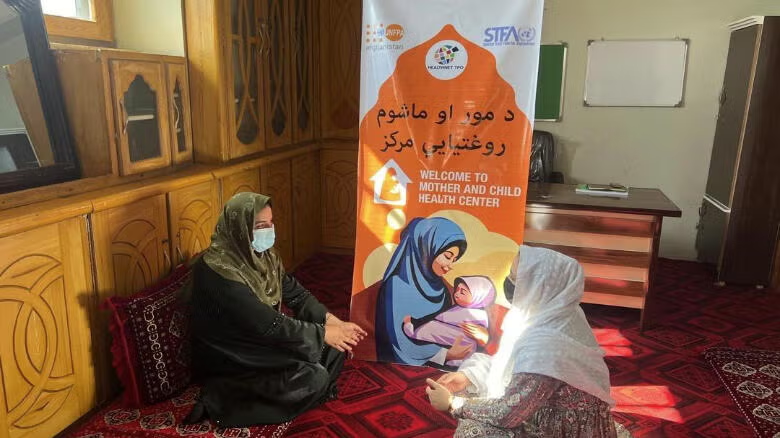
Zuhra (not her real name) was born and raised in Iran, although her family's origins trace back to Khost province. She had never set foot in Afghanistan until circumstances beyond her control led her there.
Her life took a sudden turn when her uncle arrived in Iran for work and approached her father with a proposal: that she marry his son — her cousin. Feeling obligated to comply, her father agreed, leading to a swift engagement. But soon after, her fiancé was deported from Iran, forcing her to relocate to Afghanistan to join him.
The transition was overwhelming. Adjusting to married life in an unfamiliar country, she struggled under the weight of traditional expectations. Her in-laws imposed strict restrictions, preventing her from continuing her education or seeking employment. Instead, they expected her to perform only household responsibilities.
Discovering a place that cares
Later, the added pressures of motherhood, along with the emotional strain of isolation, led to a decline in her mental health. She suffered from chronic headaches, anxiety, depression, and deep-seated negative thoughts about her future. Eventually, it strained her relationship with her husband, deepening her emotional pain and sense of helplessness.
One day, Zuhra learned about the Mother and Child Health Centre (MCHC), a facility exclusively for women and children in Khalisa Village, Khost Matoon District, staffed entirely by female healthcare workers. With the hope of helping Zuhra find help, her father-in-law allowed her to visit the centre. The MCHC is supported by UNFPA in partnership with the Special Trust Fund for Afghanistan (STFA).
Now 30, Zuhra’s healing journey began when she discovered the psychosocial support services at MCHC. Acknowledging her struggles, she started attending individual counselling sessions. Encouraged by her psychosocial counsellor, she later joined group therapy sessions, where she actively participated in role-playing exercises and interactive activities with other women facing similar challenges.