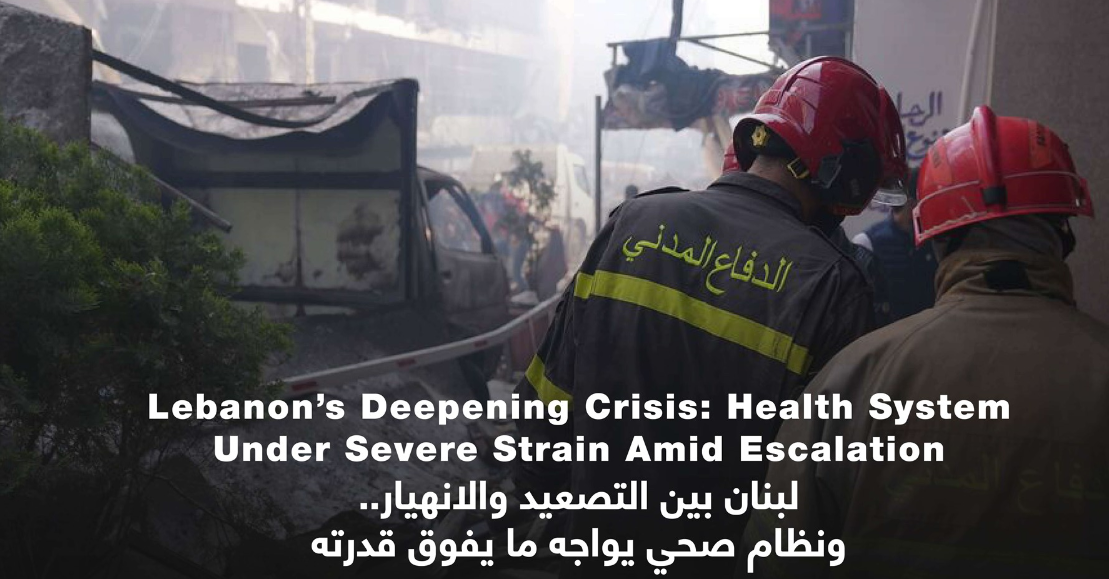
Recently, Lebanon has witnessed a sharp escalation in hostilities, with renewed airstrikes and cross-border attacks significantly worsening an already fragile humanitarian situation. The latest developments mark one of the most intense phases of the ongoing conflict, with widespread civilian casualties, mass displacement, and severe pressure on the country’s overstretched health system.
According to WHO, the recent escalation, on April 8, 2026, alone resulted in approximately 300 deaths and around 1,150 injuries, placing emergency services under extreme strain due to the sudden surge of critical trauma cases. First responders and healthcare workers were also among those killed and injured, while many victims are still reported to be trapped beneath the rubble.
Within this context, the health system is experiencing significant and sustained pressure, with mass casualty protocols activated nationwide. Health facilities across the country are operating under extreme strain, as emergency departments and trauma units continue to receive a steady influx of injured patients. This has placed hospitals under severe operational pressure, further exacerbated by shortages of essential medical supplies required to sustain emergency care, with concerns that some hospitals could soon run out of life-saving trauma medical kits.
At the frontline of this response, health workers are navigating increasingly difficult conditions. According to WHO, reports indicate that over 50 healthcare workers have been killed and more than 150 injured in recent weeks, highlighting the risks they face while delivering care. Many are working prolonged hours in overstretched facilities, often with limited resources, while also coping with the personal toll of the crisis, including displacement and insecurity.
At the same time, ambulance services are under mounting pressure and increasing threat, operating in highly constrained and often unsafe conditions. Limited access to affected areas and disruptions to safe passage are hindering their ability to reach and transfer patients promptly. These challenges are delaying response times and placing additional strain on pre-hospital care and emergency coordination across the system.
Another growing concern is the potential disruption of essential health services as pressure on the system continues to intensify. Care for noncommunicable diseases, as well as maternal and child health services, may become increasingly affected if resources remain diverted and access continues to be constrained. Such interruptions could place vulnerable populations at higher risk, particularly those who rely on regular follow-up and ongoing treatment.
All of these developments underscore the urgent need for immediate and sustained action to protect and reinforce the health system at multiple levels. Priority must be given to ensuring the continuous availability and rapid replenishment of essential medicines and trauma supplies. Equally important is maintaining uninterrupted ambulance service, which is essential for timely access to care in high-pressure settings.