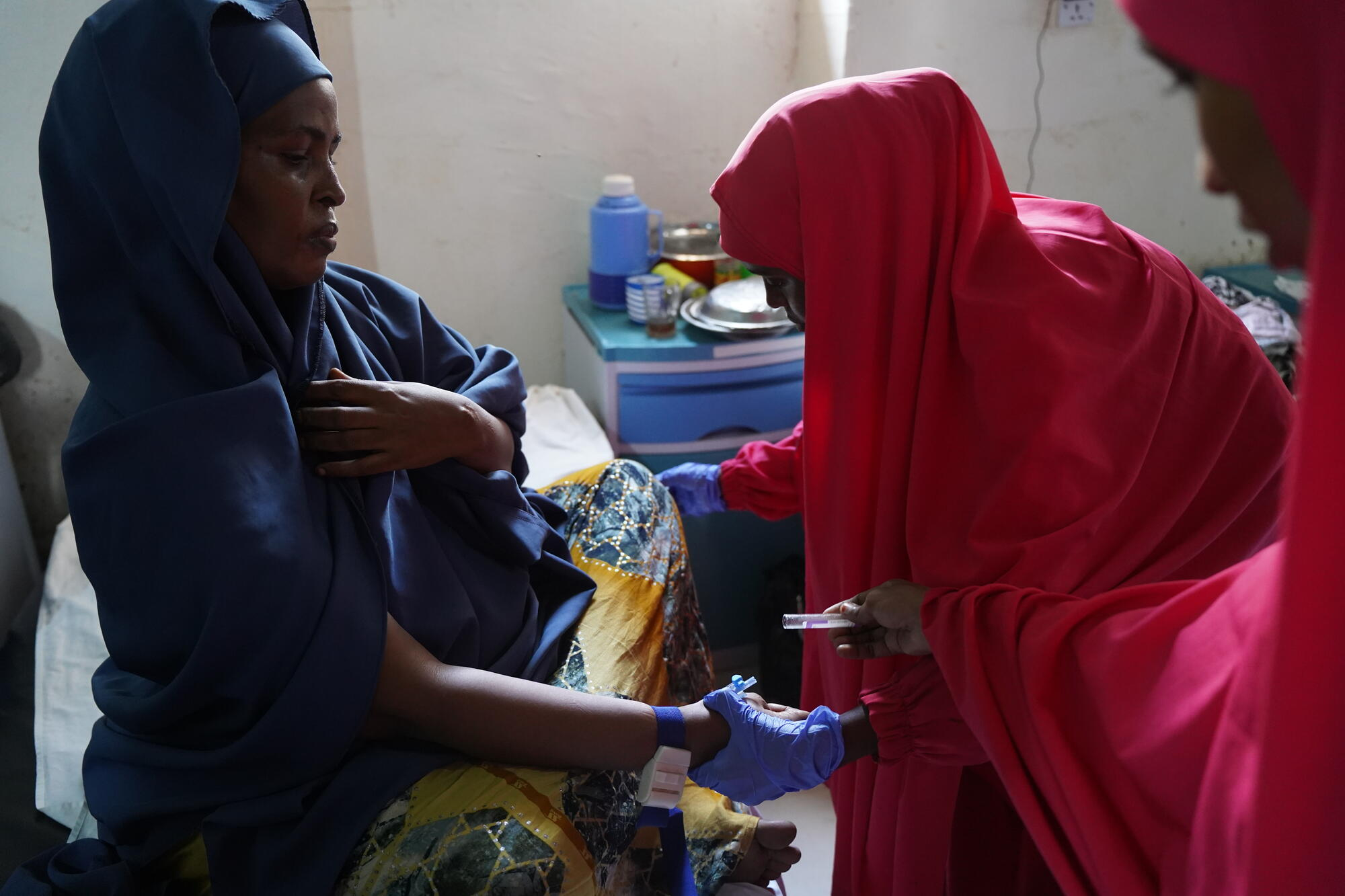
In Baidoa, South-West state, Somalia, Shaheen BiBi is the Médecins Sans Frontières (MSF) midwife activity manager at Bay Regional hospital. She describes the challenges that women in Somalia face in accessing lifesaving services; the “triple delay” of seeking, reaching, and receiving care.
She was carried on a makeshift stretcher, the afternoon sun scorching the roof of our maternity ward as she was brought in. For two days, her family and a traditional birth attendant had tried everything they knew to help her deliver. Only when she began to bleed heavily did her husband decide to bring her to MSF-supported Bay Regional hospital. By the time she reached us, she was unconscious. We did everything we could. Her baby made it, but she didn’t. She died a day later.
Each day, I see what happens when women cannot reach care in time. It is not because they do not want to come. It is because the journey, both the physical one and the one shaped by decisions made by others, is long and difficult.
In Somalia, families often try to first manage childbirth at home. This is what they know. This is what their mothers and grandmothers did. They call on traditional birth attendants, women in the community who have helped many mothers deliver. But when something goes wrong, when the bleeding does not stop, or when the baby does not come, the family must make a choice. They must decide to make the journey to the hospital.