It was one of the hottest days of June in Rawalpindi, one of Pakistan’s most populous cities. Mobile screens were showing a ‘feels like’ temperature of 41° C, along with warnings that the devices themselves might soon stop functioning because of the heat.
One group of people - women, children and elders - were sheltering in the shade of an out-of-service gas station roof.
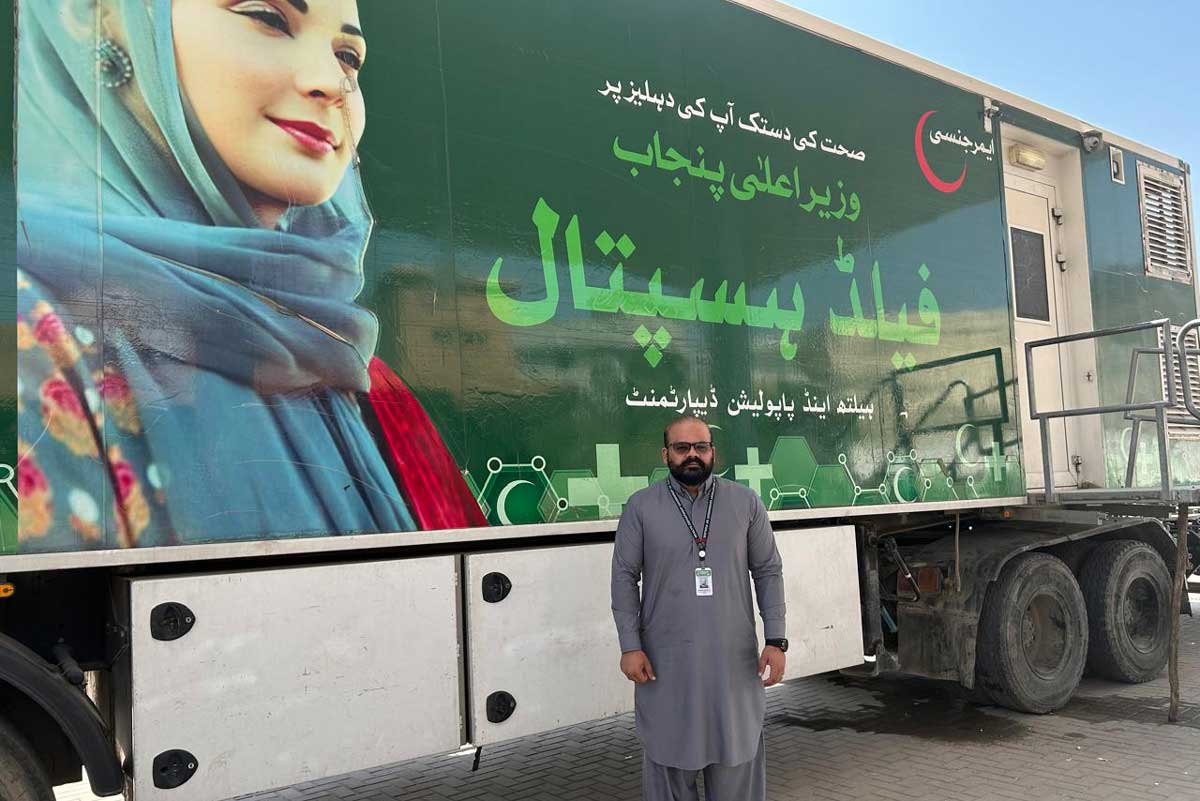
In front of them was parked an 18-wheeler, 40-foot-long truck, emblazoned with a mammoth-sized portrait of Punjab’s chief minister and the description, ‘Field Hospital’.
On the outskirts of the city, this locality, known as Dhok Gujjaran, is inhabited by a large migrant and slum population. It’s an informal, unplanned settlement, and the closest tertiary care hospital is around 20 kilometres away.
“In a locality where the connecting roads are uneven and congested, having a complete mobile hospital is a blessing for the community,” said Kashan Ahmed, father of a two-week-old daughter, Esha Noor.
Ahmed, who works as a daily-wage labourer, and his wife had brought Noor for her birth-dose vaccinations. Calling the initiative very good, Ahmed said earlier people living here had to travel long distances to visit hospitals for medical check-ups, which was inconvenient and expensive.
“I believe this is a very positive step,” said Ahmed of the imposing, wheeled vaccination clinic.
The Punjab government launched the Field Hospital Initiative in May 2024. Provincial Minister for Primary and Secondary Healthcare Khawaja Imran Nazir told VaccinesWork that its primary objective is to provide essential, high-quality healthcare services, along with comprehensive diagnostic and treatment services, directly at the doorsteps of rural and remote populations.
Under the programme, 33 full-sized, truck-mounted field hospitals, as well as 21 mobile healthcare units and 11 smaller, van-sized field hospitals, are deployed in rural areas of Punjab to increase healthcare coverage, including vaccination.
Minister Nazir said establishing these field hospitals in rural and slum areas was driven by the need to address severe healthcare inequalities, overcome geographic and financial barriers, and tackle the limitations of the current public health infrastructure.