Despite serving as the backbone of rural healthcare, Bangladesh's community clinics continue to struggle with staff shortages, medicine gaps and growing healthcare demands
In a small house in Angaria village under Dumki upazila of Patuakhali lives the family of Laizu and Rahman Shikder. Their four-year-old son, Ridwan, is now relatively healthy.
At first glance, he appears like any other child. But not long ago, he was hospitalized due to complications caused by malnutrition. His elder brother and sister have faced similar health problems. From early childhood, all three children have been caught in a cycle of malnutrition, weakness and irregular treatment.
The family said their illnesses were not detected or properly managed in the early stages due to prolonged low income, lack of regular health check-ups and the absence of consistent healthcare services at the local level.
As a result, conditions that could have been treated easily at the beginning gradually worsened, eventually requiring hospital admission.
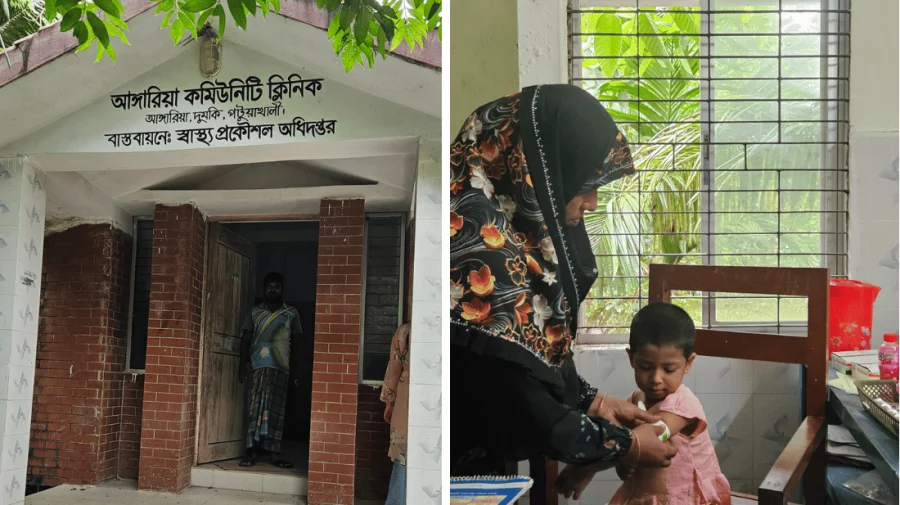
Ridwan’s mother, Laizu, said they had visited the local community clinic several times but often did not receive medicines.
“Most of the time, we found the clinic closed. And when we went to a clinic a bit far away, they told us to go to the Upazila Health Complex. Because of a lack of money, we were delayed. Later, when the condition became worse, we had to take him to the hospital,” she said.