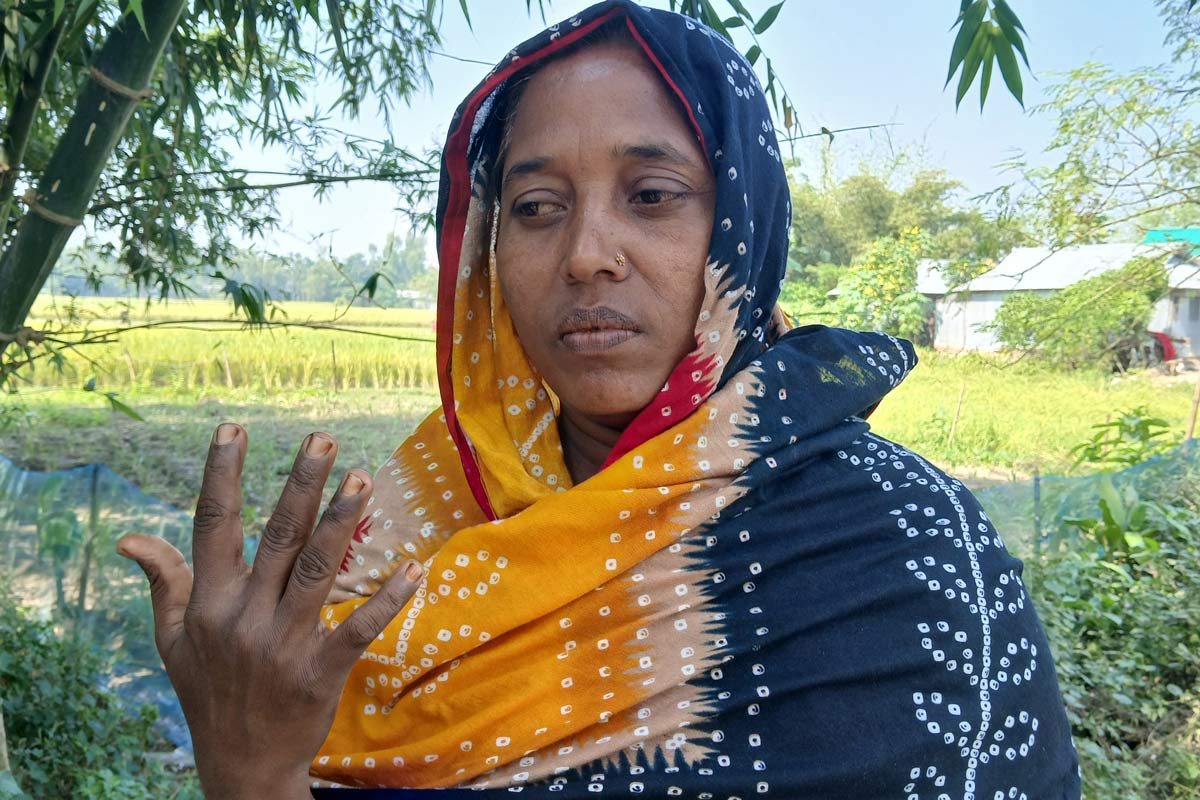
In the first week of September, Fatema, wife of autorickshaw driver Billal Hossain of Nagarjitpur village in Rangpur district, cleaned and sliced up a piece of recently-butchered beef to cook. “After a few days, I saw some blister-like things were exposed on my hands and it was itchy. I got panicked and went to the doctor.”
She correctly suspected that the butchered cow had been sick with anthrax. Between July and September about 50 human cases of the zoonotic disease were reported in the district. Two other districts were also affected.
Anthrax is zoonotic, leaping from animals to humans, and many more animals than humans contracted the infection. At least seven cows in Nagarjitpur alone died with anthrax in that time period, according to locals, and several of Fatema’s neighbours had contracted the infection.
Mohammad Munnaf, 35, described experiencing “severe ache” from the blisters on his hands in August, after one of his cows was diagnosed with anthrax. Without proper care, anthrax can be fatal in humans, but like Fatema’s, Munnaf’s symptoms eased with treatment.
Outpatient care appears to have sufficed across the upazila. “No patient was admitted to hospital. The situation remains under control due to building awareness among people, and inoculating animals with anthrax vaccine,” Dr Muhammad Tanvir Hasnat, Health Officer at Pirgachha Upazila Health Complex, told VaccinesWork late last year. “We notified [the outbreak] to the higher authority and found no cases after September.”