It was in the middle of a cold November night when a knock sounded at the door. “My wife is giving birth. Could you take her to the hospital? We can't go out. If we leave our home, the police will detain us. Please, as a human being, help us.”
These were the words of an Afghan refugee, spoken as he stood at the door of a rickshaw driver that night. His wife was in labour, but amid widespread deportations of Afghans in Pakistan, they feared leaving their home, even for urgent medical care. The family now faced the unimaginable: giving birth without support, in isolation, and under extreme stress.
Even though he knew the family had no money, the driver agreed to rush the woman to the hospital. “As a human being, I felt their pain and decided to bring her to the hospital, completely alone, without any caretaker by her side,” he said, recalling the journey to a Médecins Sans Frontières (MSF) facility in Balochistan, Pakistan.
“I witnessed everything. She was screaming all the way to the hospital. She delivered her baby in my rickshaw – it was full of blood. I cannot describe it in words. It broke me, listening to her screaming and driving at the same time. I was in mental trauma.”
At the hospital, our teams attended to the woman and her baby. Following a dangerous and frightening experience, both were healthy, and, at least for the time being, safe. But the experience of this woman and her child is not isolate.
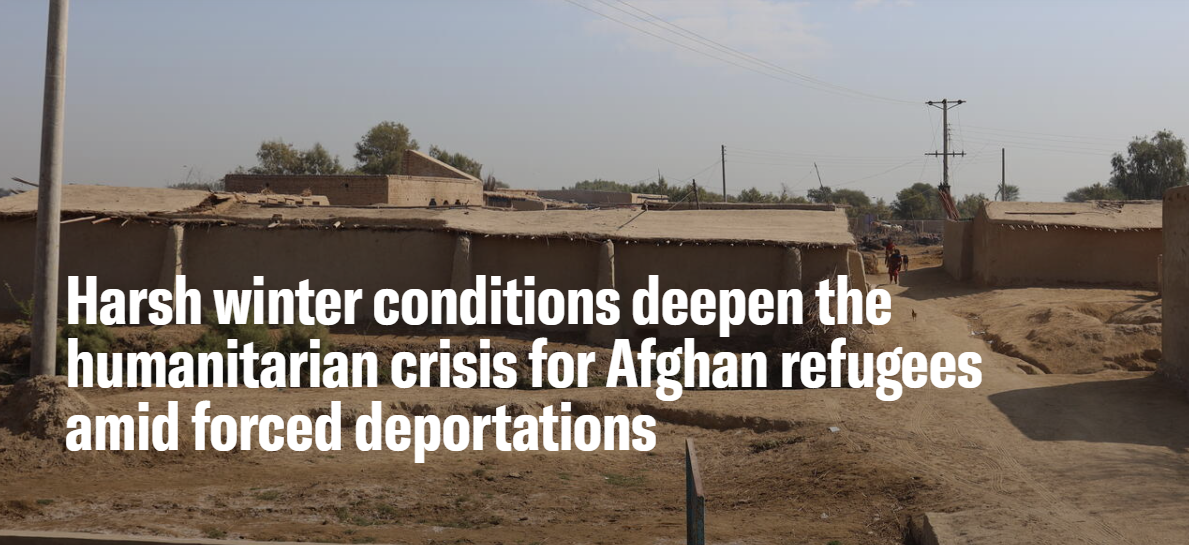
The mass deportation of Afghan refugees from Pakistan has become a catastrophic humanitarian crisis, deepening the suffering of an already vulnerable community. These deportations leave many refugees without shelter in some holding camps with little to no facilities, healthcare, or means of survival. Average temperatures are around 10°C, falling below 5°C during nights and early mornings. The fear of arrest and detention has prevented many from seeking medical care. This fear leads to trauma-induced miscarriages, untreated illnesses, and the refusal of medical care due to the lack of documentation.
Since the late 1970s, Pakistan has been home to millions of Afghan refugees. Over the past four decades many have fled conflict, persecution, and instability in Afghanistan, seeking refuge in neighbouring Pakistan. Over time, many have established communities, livelihoods, families, and small businesses to survive in protracted displacement.
Many of them have spent more of their lives in Pakistan than Afghanistan and have children who have never been to Afghanistan at all. However, since November 2023, the Government of Pakistan has been implementing the Illegal Foreigners Repatriation Plan (IFRP), primarily affecting the large Afghan refugee population. The deportation drive began by targeting undocumented Afghans, then expanded its scope to include holders of the Afghan Citizen Card (ACC), a protection previously given by the Government of Pakistan that allowed Afghan citizens to stay in the country. Most recently, Afghans with Proof of Registration (PoR) cards, who were granted temporary legal stay by the Government of Pakistan in collaboration with the United Nations, have also been subject to forced repatriation.