The World Health Organization (WHO) has concluded its malaria programme review mission in Afghanistan, stepping up efforts to reduce the country’s rising malaria cases.
Each summer, heavy rains and rising temperatures create ideal breeding conditions for mosquitoes. From June to November, malaria threatens more than three-quarters of Afghans living in high-risk eastern and south-eastern provinces. Climate change has intensified the problem, with hotter summers and heavier rainfall expanding mosquito habitats.
After declining between 2018 and 2021, malaria cases began increasing again in 2022, peaking in 2024 and remaining high through 2025.
Nangarhar, Laghman, Kunar and Nuristan are among the most affected provinces where nearly every household faces malaria during the peak season. Most cases are caused by Plasmodium vivax, a parasite that can remain in the body and cause malaria to return weeks or months later.
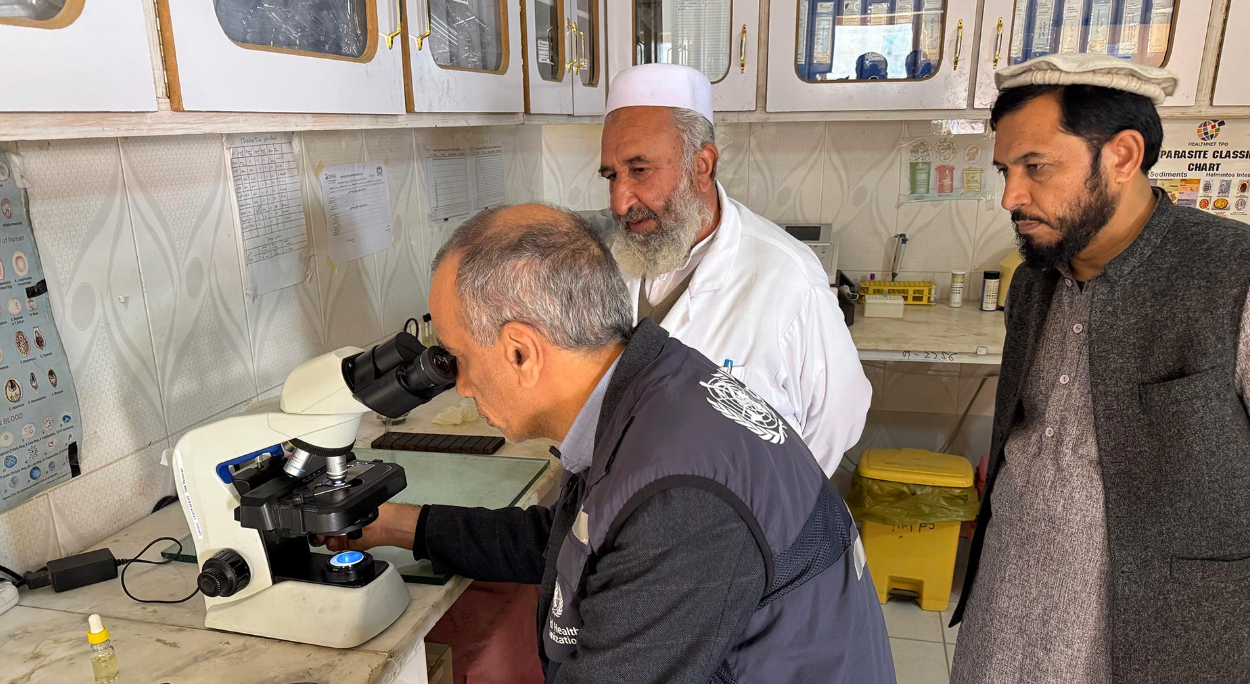
In partnership with national health authorities and experts from WHO headquarters and the WHO Regional Office for the Eastern Mediterranean, WHO Afghanistan carried out a comprehensive review of the national malaria programme. The field visits provided a clear picture of what communities need most to stay protected.
The mission identified key priorities:
These priorities will be taken forward with national counterparts based on feasibility and seasonal needs.