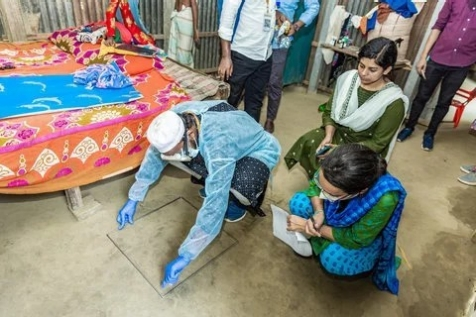
Expecting a child should be a time of hope, not fear of the next flood. But for many pregnant women in rural Bangladesh, climate change is turning everyday rainfall into a mental health crisis.
A new study led by Suni Hanif, a master's student in Stanford's Department of Epidemiology and Population Health, and Jade Benjamin-Chung, assistant professor of Epidemiology and Population Health, reveals that recent flooding of an expecting mother’s home is associated with more than twice the risk of prenatal depression and more than eight times higher thoughts of self-harm among pregnant women. The research, published in PLOS Global Public Health, combines satellite data, household surveys, and focus group interviews to show that flooding is profoundly harming maternal mental health.