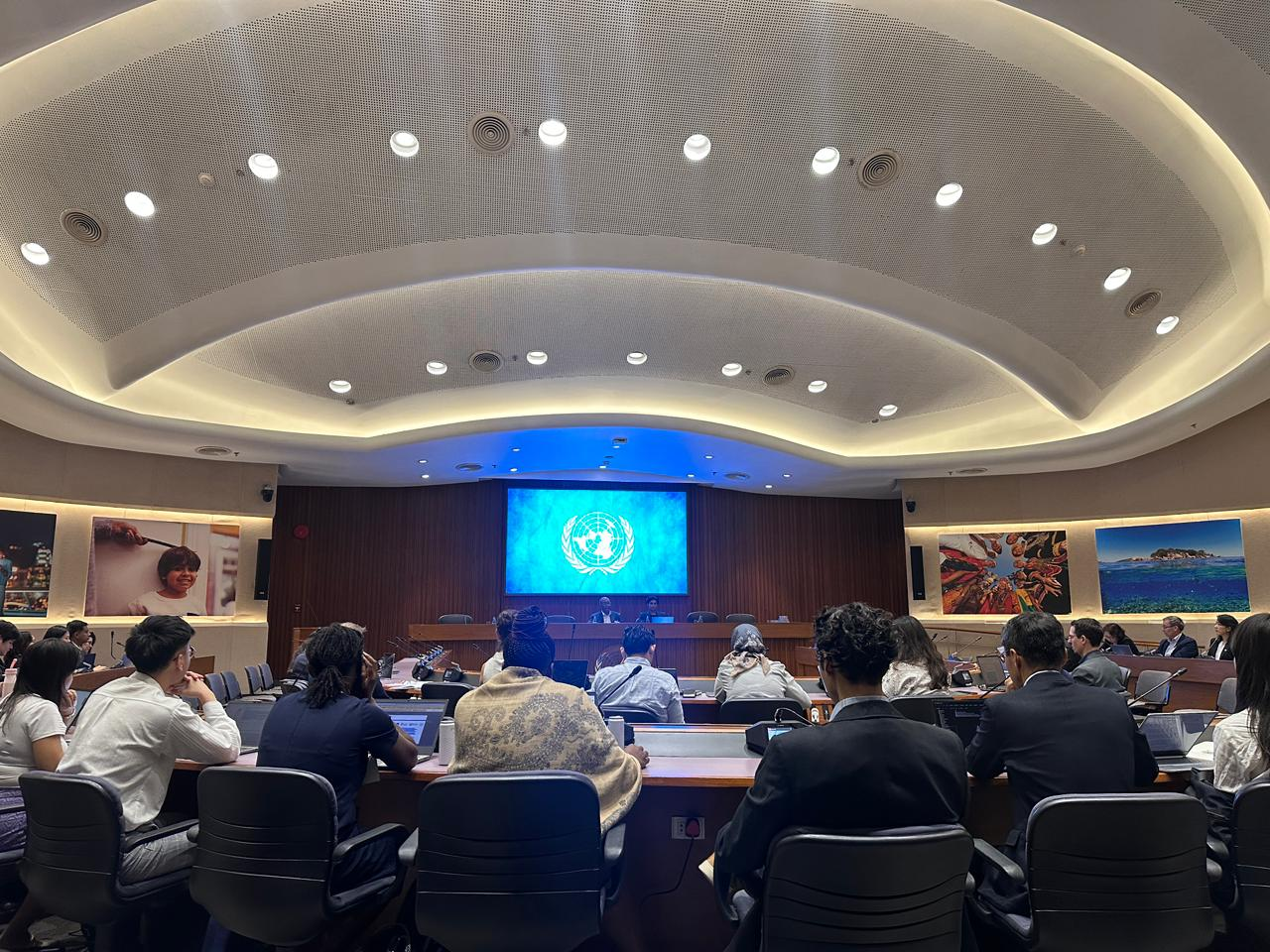
Hundreds of hours of formal negotiations and corridor-side bargaining in the halls of the United Nations (UN) Palais des Nations and World Health Organization (WHO) headquarters this week ended on Saturday afternoon – more or less on schedule, an outcome rare enough at the UN to be cause for celebration.
The sunshine, Mont Blanc’s snow-covered peak, the shining waters of Lake Geneva, and the fancy canapés circulating at side-event receptions were a sharp contrast to the storm of crises unfolding in the global health world throughout the week.
A fresh Ebola emergency ripping through the Democratic Republic of Congo. The tail end of a hantavirus outbreak. Diplomatic wars over conflicts in Iran, Lebanon, Gaza and Ukraine. And a WHO finding, released days before the assembly, that the world is on track to miss every single health-related UN 2030 development goal.
Between the headlines on the global health financing emergency, WHO’s declining budget, Argentina’s withdrawal from the organisation and the first-ever absence of the United States — whose voting rights were formally suspended for the 2027 Assembly for its failure to pay membership dues — member states quietly adopted more than 20 decisions and 13 new resolutions.
Several updated health frameworks decades to over half a century old. Most went unnoticed. Here’s what they decided.
Perhaps the most consequential unnoticed text adopted this week was the first revision in 16 years of the WHO Global Code of Practice on the International Recruitment of Health Personnel – the people on whom, after all, every other resolution depends.
Ahead of the assembly, an Expert Advisory Group appointed by the WHO to conduct the third review in the Code’s 16-year history delivered a verdict on its efficacy. Unusually direct for a UN document, they noted that it is not working.