
Preventing infections in health facilities remains one of the most effective ways to protect patients and preserve the effectiveness of life-saving medicines. In a context where health systems are under pressure, strong infection prevention and control measures are essential to reducing avoidable complications and slowing the spread of antimicrobial resistance.
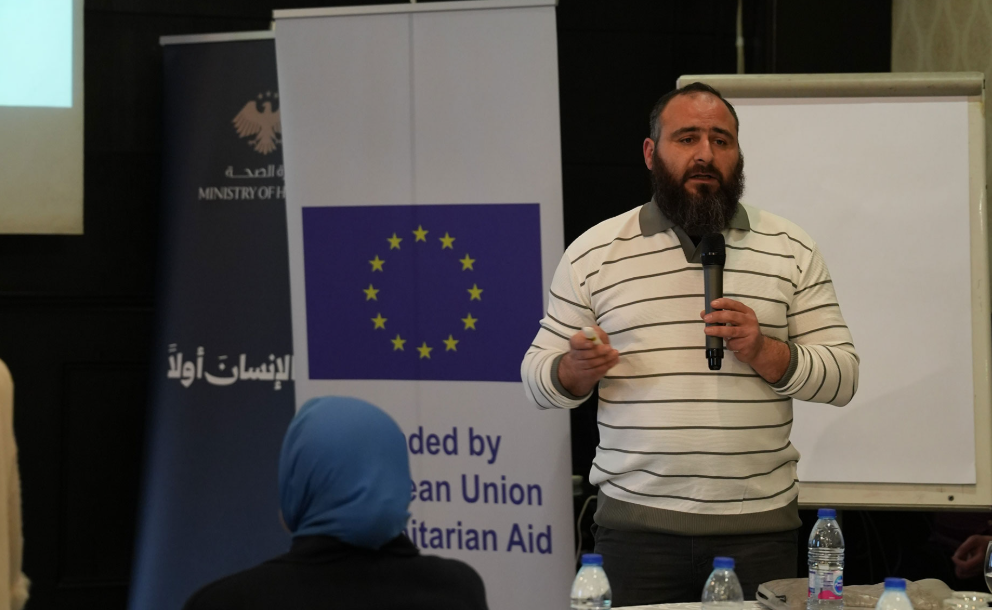
To reinforce these efforts, the Ministry of Health convened a two-day national workshop in Damascus to update Syria’s National Action Plan on Antimicrobial Resistance, with a strong focus on strengthening infection prevention and control. The workshop was supported by the World Health Organization, with funding from the European Union through EU Civil Protection & Humanitarian Aid.
More than 50 representatives from government institutions, academic bodies and partner organizations worked together to define clear priorities and agree on practical steps for implementation. The discussions marked a shift from strategic planning towards concrete, coordinated action.
Dr Yasser Farouh, Director of the Communicable Diseases Department at the Ministry of Health, described the discussions as a critical step forward. “This workshop represents the transition from strategic planning to implementation,” he said. “Through these sessions, we are defining priorities and moving towards concrete action.”
“This workshop represents the transition from strategic planning to implementation,” he said. “Through these sessions, we are defining priorities and moving towards concrete action.”
Participants identified key areas for immediate focus, including strengthening infection prevention practices in health facilities, improving surveillance systems, and reinforcing national coordination mechanisms. Practical measures – from safer clinical procedures to responsible antibiotic use – are central to reducing infections and limiting the development of resistance.
Dr Ola Abbara, member of the AMR Expert Committee, emphasized the importance of sustained collaboration. “This meeting brings together all stakeholders to renew the national action plan and strengthen coordinated efforts,” she said. “Infection prevention and control is a core pillar of this work, helping protect patients and reduce antimicrobial resistance in Syria.”
Antimicrobial resistance increases the risk of complications, prolongs hospital stays and raises costs for families and the health system. Dr Susan Nouri, Head of Infection Control and Quality in Healthcare Facilities, highlighted the broader impact of effective programmes.