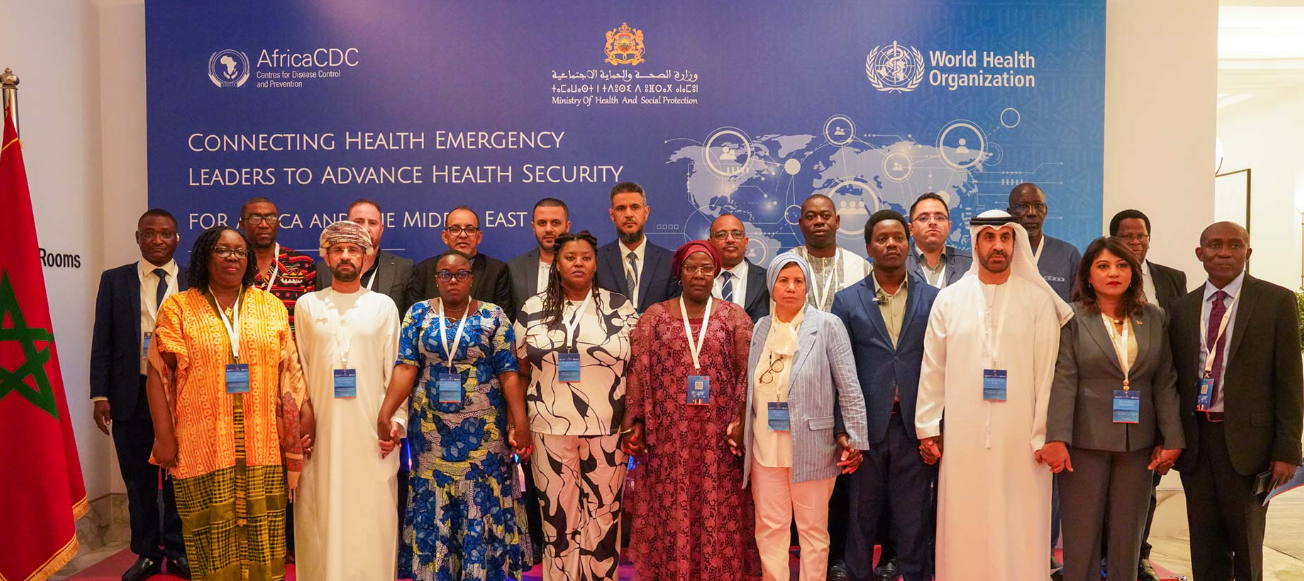
Senior health emergency leaders from across Africa and the Eastern Mediterranean concluded a three-day meeting in Rabat by putting forward a draft Statement of Intent. The working document sets out the collective intention of WHO Member States in both regions to strengthen communication and trust, reinforce preparedness, and improve collaboration when crises strike.
During the meeting — first of its kind, bringing together senior health emergency officials from the two WHO regions under one common platform — the Regional Health Emergency Leaders Network (HELN) was launched to connect countries and foster the trusted relationships needed for faster, more coordinated and agileresponses.
The African and Eastern Mediterranean regions face some of the world’s highest burdens of humanitarian and health emergencies. 27 countries (almost half of all countries across both regions) are classified as fragile,conflict-affected and vulnerable by the World Bank. Cholera remains the most urgent and widespread threat across both Regions, while mpox is also being reported in several of the regions countries. The re-emergence of Ebola in Africa has also highlighted the urgency of better cross-border collaboration.
WHO Member States highlighted the value of a shared draft Statement of Intent that could guide future cooperation:
“The Rabat draft is an opportunity to act differently. When the next epidemic, natural disaster, or displacement crisis comes, we will now already know whom to call, how to share information, and how to respond. That is how we save lives.”
— Prof. Grace Ayensu-Danquah, Deputy Minister of Health, Ghana