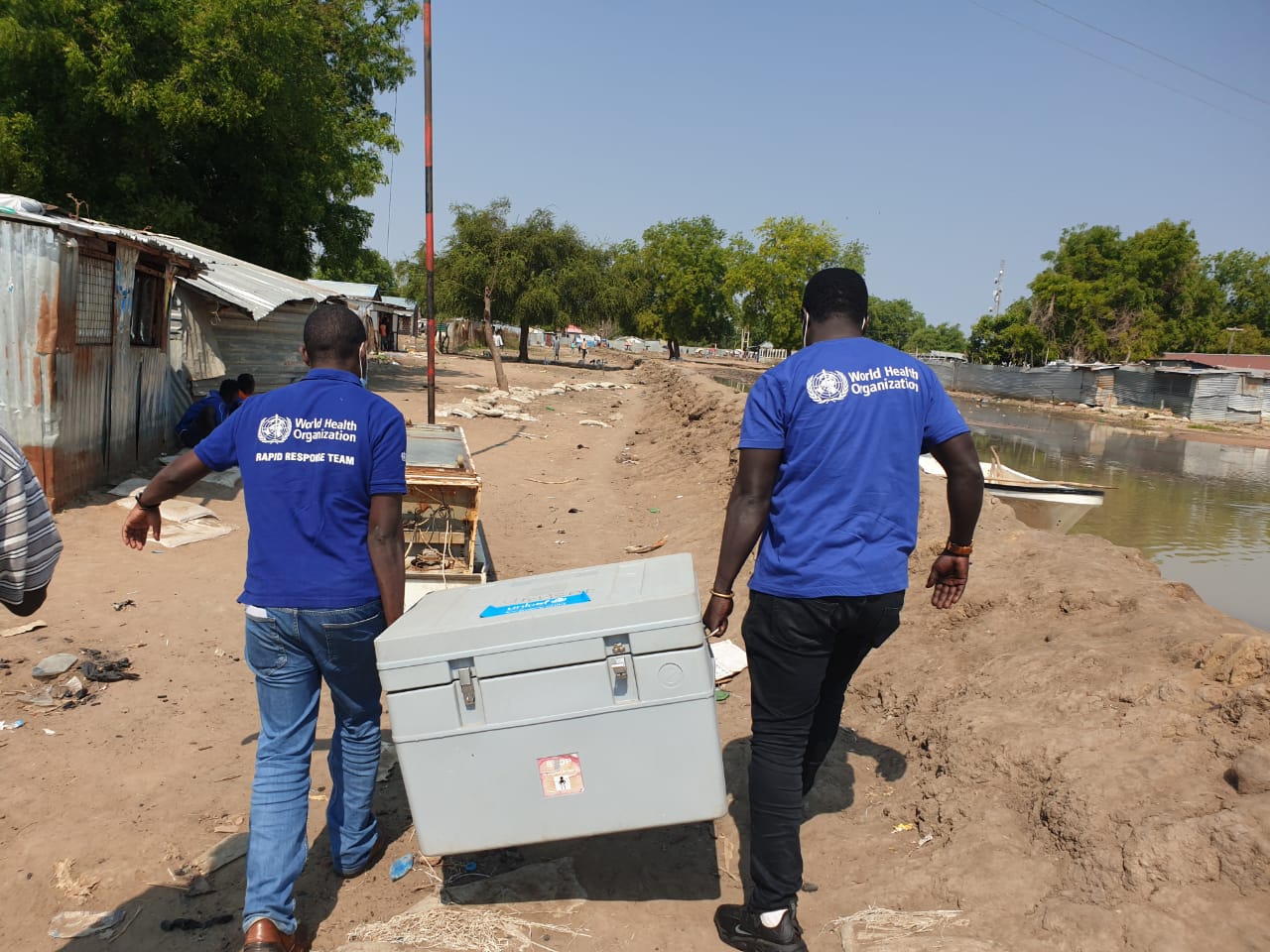
The ongoing rainy season in South Sudan is slowing cholera response efforts in some locations, raising concerns about further transmission and undermining progress the country has made so far in combating the outbreak.
South Sudan experiences heavy rainfall between mid-July and October. The States of Jonglei, Unity, Upper Nile, Northern Bhar el Ghazal, Warrap, parts of Central Equatoria, and others experience seasonal flooding, resulting in massive displacement, and affecting the delivery of basic health services. The rainy season worsens access and sanitation, disrupts the shipment of medical supplies, hinders deployment of rapid response teams, and vaccination impedes efforts, making it difficult to protect communities and save lives.