
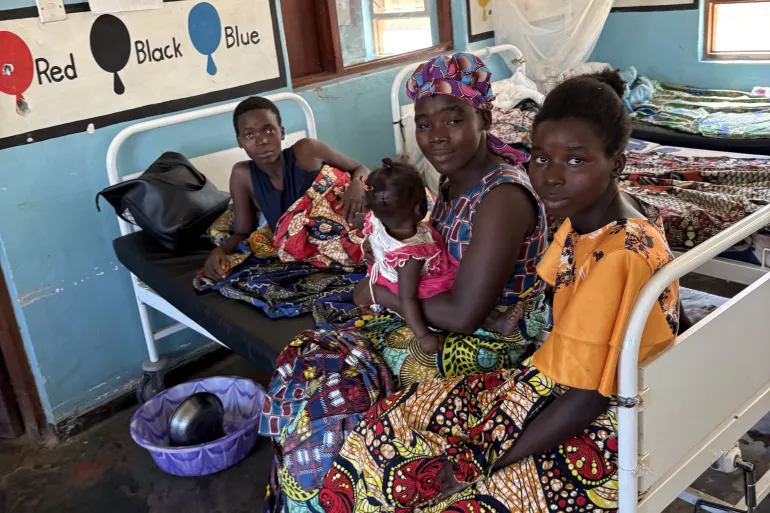
Ireen Makata sits in her white nursing uniform on a weathered bench at a health post in Malawi’s southern Mulanje district.
The facility is one of 13 in the district, located within a seminomadic, predominantly agricultural community 65km (40 miles) east of Blantyre, Malawi’s commercial capital, near the Mulanje mountain range.
The beige-painted facility stands out from the dozens of huts around it made of red bricks, with straw roofs. To the right of the main entrance is a supply room with diminishing medical supplies. On the other side is an ambulance that Makata says is now rarely used.
Health posts like this were set up to serve remote communities and alleviate pressure on district hospitals. They were crucial in providing communities with basic healthcare, antenatal care, family planning and vaccines.
The clinic in Mulanje used to see dozens of women a day, providing maternal care, including helping women give birth, dispensing medicines and, when needed, transport to the hospital. But now, since funds were cut, it is open only around once every two weeks, stretching its supplies for as long as it can and unable to regularly transport visiting healthcare workers.
Health posts like this are facing closure – 20 have already shuttered in the country – due to the Trump administration cutting United States Agency for International Development (USAID) funding in February. This is forcing the country’s health system to withdraw critical services, placing further stress on hospitals, and leaving thousands of women and children without needed care in a region burdened by poverty and long distances to hospitals.