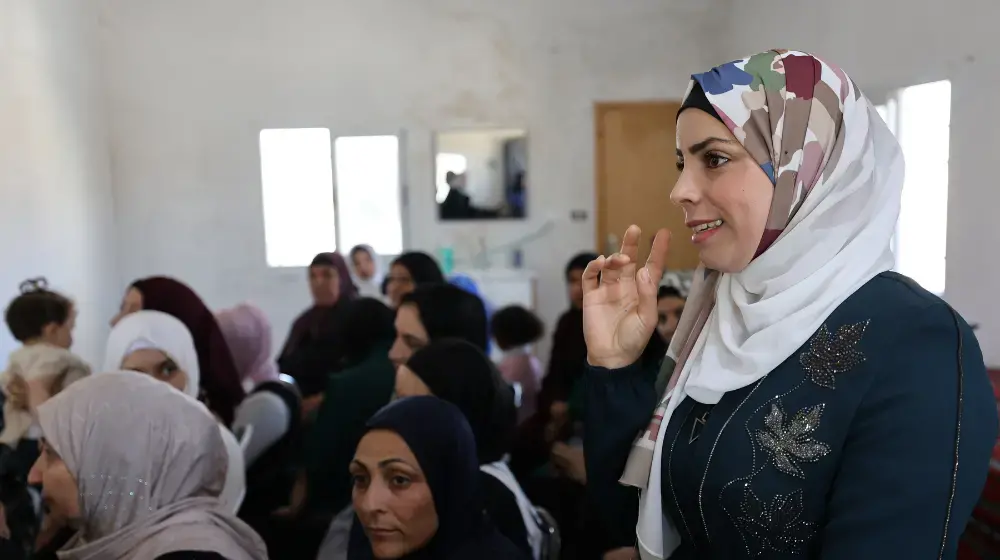
Ayat, 29, is a mother of four and pregnant. She lives in Deir Al Shams, a rural community in southern Hebron where there are no nearby health services, no places for women to gather, and few opportunities for connection.
She explained that for women in her community, even getting a health check-up is difficult. “If we want to see a doctor, we have to go to the city. For that you need a private taxi, which costs 60 or 70 ILS” – around $18 to $22 in US dollars – “so it’s really far.”
For Ayat, a new mobile safe space supported by UNFPA, the United Nations sexual and reproductive health agency, is the first chance she’s had of regular access to mental health support. Launched in August 2025, the safe space brings services like first aid as well as counselling, awareness sessions, and empowerment programmes directly to isolated communities.
“We definitely need a place like this,” she said. “Here women only see each other on special occasions. Now we can meet and become close. We live a stressful life and we need psychosocial support.”
The deepening crisis in the West Bank is having a devastating impact on the lives of Palestinians living in occupied areas. Increased displacement, destruction of infrastructure and severe restrictions on movement are all limiting access to essential services like education and healthcare; this has a further knock-on effect on the futures and well-being of thousands of people. The psychological toll is immense, with nearly all women and girls experiencing heightened fear and anxiety.
From one village to the bigger picture
Deir Al Shams is one of the most marginalized areas in the southern Hebron Governorate. Many face isolation and poverty, and there are no consistent education services or permanent safe spaces for women and girls.
Across the West Bank, over 230,000 women and girls have limited or no access to reproductive health services – among them some 14,800 pregnant women. In rural areas, survivors of gender-based violence face not only a lack of confidential places to seek help and refuge, but they must also grapple with stigma and fear of retaliation.