
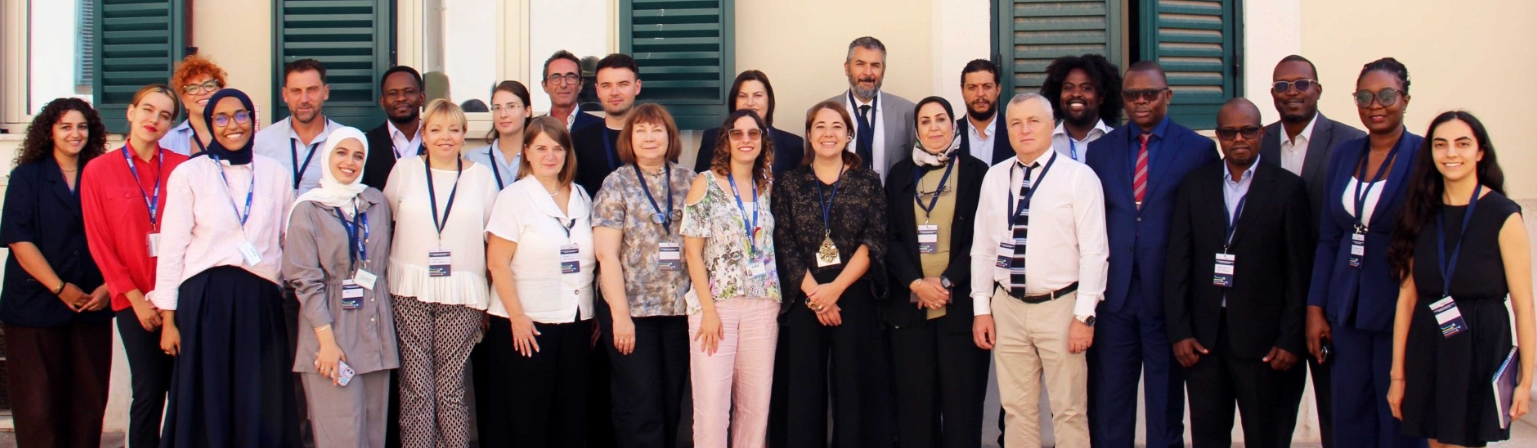
From 21 to 24 September 2026, policy-makers, health managers and technical experts from seven countries and territories gathered in Rome for the second Global Orientation Course for Policy-makers on Refugee and Migrant Health. Jointly organized by WHO Health and Migration Programme (PHM) and the Italian National Institute for Health, Migration and Poverty (INMP), the programme explored how strengthening competencies across health systems can contribute to improved health outcomes for refugees and migrants.
"At INMP, advancing health equity means putting the principle of equality into practice. As a WHO collaborating centre, we develop and implement innovative models of care to ensure that health systems respond to the needs of refugees, migrants and host communities,” said Dr Cristiano Camponi, INMP General Director. “Strengthening the competencies of the health workforce is fundamental to delivering inclusive, people-centred and high-quality health services for all."
As migration and displacement continue to shape public health priorities, health systems require the capacity to respond to diverse population needs through inclusive policies, effective governance and a workforce equipped to deliver equitable, culturally responsive and people-centred care.
“Strengthening the competencies of health workers, health leaders and policy-makers is essential to building inclusive and responsive health systems,” said Dr Santino Severoni, Head of WHO PHM. “By translating global commitments into practical action at country level, we can advance more equitable health outcomes for refugees, migrants and host communities alike.”
Building on the inaugural course held in 2024, the programme focused on supporting countries to implement the WHO Global Competency Standards and strengthen national capacities on refugee and migrant health. Through technical sessions, country presentations and peer exchange, participants explored workforce development, culturally responsive care, governance, multisectoral coordination and evidence-informed decision-making.