In Merung, one of the remotest unions of Khagrachari, in the Chittagong Hill Tracts, menstrual health was once a silent struggle. Limited awareness and the high cost of sanitary pads kept girls out of school and women in discomfort. Today, thanks to UNDP Bangladesh’s Women and Girls Empowerment through Inclusive Education (WGEIE) initiative under the Ecosystems Restoration and Resilient Development in the CHT project, supported by the Government of Canada, that reality is changing, led by local champions like Julli Chakma.
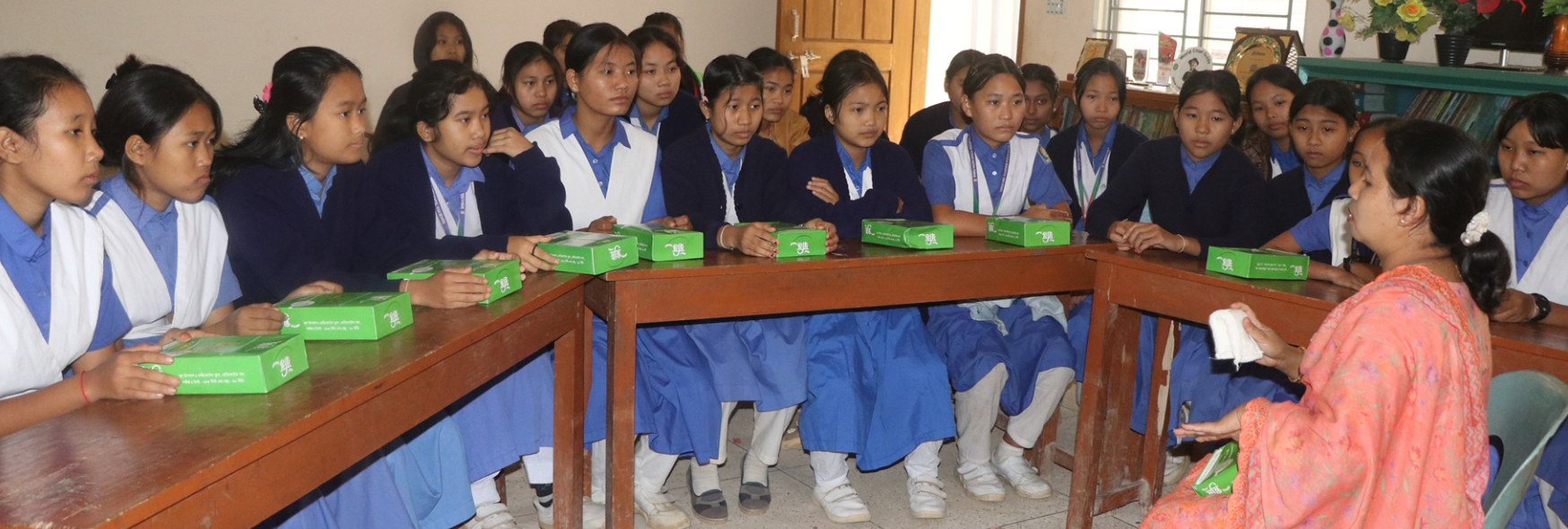
Julli, a 37-year-old Reproductive Health Care Worker (RHCW), is part of a network of 118 trained women working attached to 270 project supported educational institutions across the three hill districts. Their mission: to break taboos, spread knowledge, and make safe, biodegradable sanitary pads “Swasti” accessible to every girl and woman. “Swasti” pads, approved by BSTI, are locally produced with support of ERRD-CHT Project, making them affordable and environmentally friendly.
Armed with training in menstrual hygiene management, entrepreneurship, and community engagement, Julli conducts regular sessions in schools and villages. She doesn’t just sell Swasti pads at subsidized price; she teaches proper usage, timely replacement, and the importance of dignity in menstrual health. Her outreach has transformed attitudes, girls are staying in school, women are speaking openly, and communities are embracing healthier practices.
This initiative is absolutely crucial. In the CHT, where geography and cultural barriers often isolate women from essential health services, community-based workers like Julli are the bridge. They bring care, confidence, and conversation to places where silence once prevailed. As Julli says, “Before this, many girls missed school and women suffered silently. Now, I see growing confidence and awareness among them—and in myself.”