
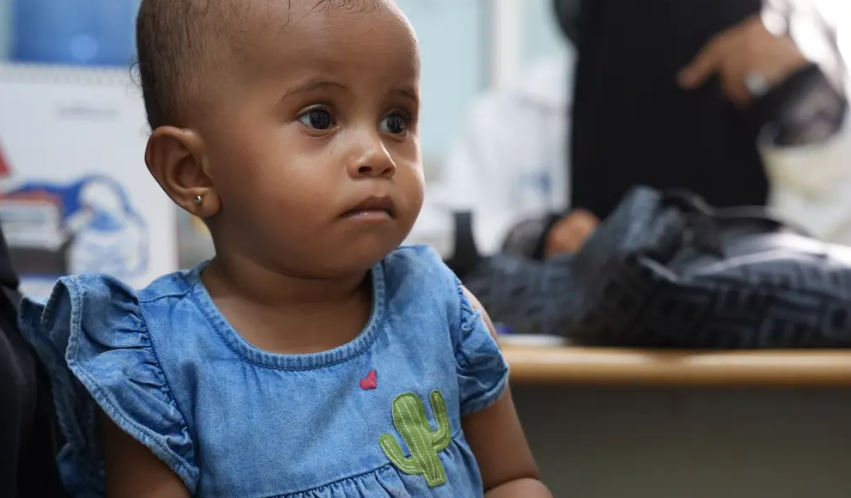
Many of the most serious nutrition crises for children have received less than a third of the funding needed this year, according to a new analysis by Save the Children for World Food Day.
LONDON/GENEVA, 15 October 2026 – Many of the most serious nutrition crises for children have received less than a third of the funding needed this year, according to a new analysis by Save the Children on the eve of World Food Day. [1]
Save the Children analysed data on the funding gap in countries experiencing high levels of malnutrition, food insecurity and poor health indicators. The analysis of almost 20 countries including Sudan, Yemen and Somalia found that of the about $10 billion required for programmes tackling food security, malnutrition, health and water and sanitation, just 31% ($3.1 billion) had been received as of early October. [2]
The shrinking support comes as needs are rising, requiring a new approach to tackling malnutrition that spans prevention, treatment, and strengthening healthcare, said Save the Children.
In response, Save the Children has launched Nourished Futures, a new global initiative which aims to raise $300 million to treat and prevent child malnutrition and illness in the toughest humanitarian contexts [3].
Globally, over 43 million children suffer from acute malnutrition – when a child weighs too little for their height – which threatens children’s health and lifelong growth while contributing to 45% of all deaths of children under the age of five. Many malnourished children live in fragile and humanitarian contexts, affected by conflict, instability and shocks with little or no access to services to prevent, detect, and treat malnutrition.
This year’s El Niño weather event – predicted to be one of the strongest in decades – is expected to deepen hunger and malnutrition further, because of dangerous droughts, crop failures, flooding and livestock losses. In Somalia, for example, an estimated 1.92 million children under five will need treatment for acute malnutrition in the 12 months to June 2027, with El Niño flooding forecast to worsen the situation.
In Yemen, one of the world’s worst hunger and nutrition crises, an estimated 2.2 million children – almost one in four – are acutely malnourished after years of conflict and economic crisis, with the recent escalation in violence exacerbating needs further. About half a million children in Yemen are suffering from severe acute malnutrition – a life-threatening state that causes severe muscle wasting, weak organ function, and collapsed immunity if left untreated.