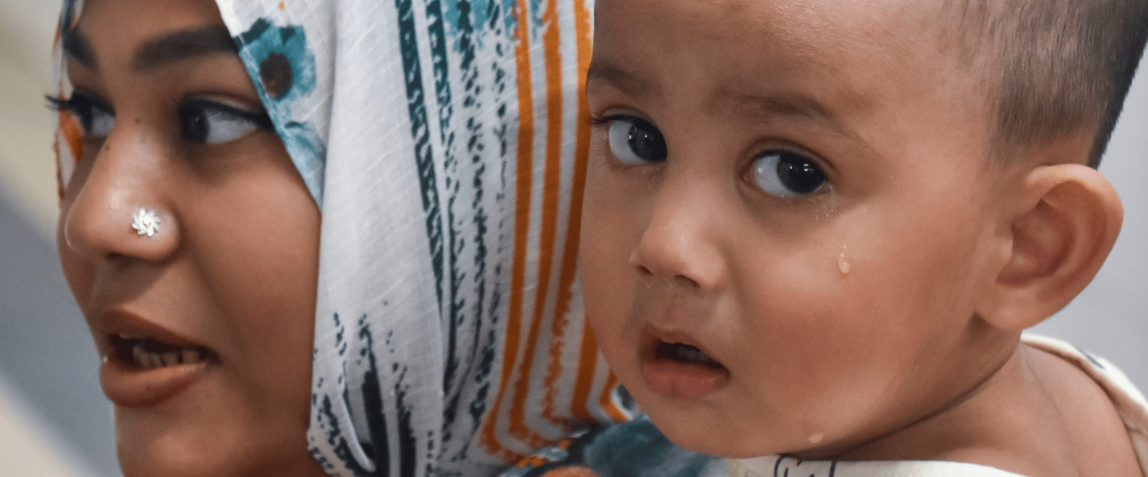
At the Ma O Shishu Shastho (Mother and Child) Hospital in Mohammadpur, west Dhaka, Afrida, 32, holds her two children – Ohran, 2, and Anika, 5 – close as they move through a crowded vaccination hall. Families arrive, children receive their shots and parents leave with quiet relief.
“The situation is dangerous. Bangladesh is heavily affected, and I was very scared for my children,” she says. “I brought them because I know the vaccine will protect them.”
Afrida’s concern is shared by families across Bangladesh, where, as of 18 April, a rapidly spreading measles outbreak has reached 58 of the country’s 64 districts. Highly contagious and potentially fatal, measles poses a serious risk to young children, particularly where immunization gaps persist.
More than 22 400 suspected cases and 3278 confirmed infections have been recorded. Young children between the ages of 6 months and five years are most affected, with 178 suspected deaths, largely among un- and under-vaccinated children below two years of age.
Rapid vaccination is critical to stop transmission and protect those most at risk.
“Measles is one of the most contagious diseases,” says Dr Jahangir Alam, WHO’s Divisional Coordinator for Dhaka, one of the most affected divisions. “Even small gaps in immunization coverage can trigger outbreaks. Every missed child increases the risk, but this is a disease we can prevent.”
A rapid national response
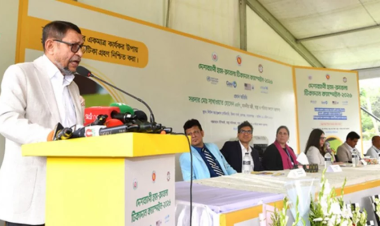
On 5 April 2026, following a sharp rise in cases through March, the Bangladesh Ministry of Health and Family Welfare (MoHFW) launched an emergency measles–rubella vaccination campaign, targeting children aged 6 months to 5 years, regardless of prior vaccination status. The campaign began in 30 high-risk upazilas across 18 districts.
The scale up has been swift. By 18 April, more than 1 492 000 children had been vaccinated in 30 Upazilas and four City Corporations, where over 2.4 million children are expected to be reached. On 20 April, the campaign was expanded nationwide, covering all remaining districts.
For health workers, the campaign is more than a professional duty; it is deeply personal.
“When I heard about the measles outbreak, it was heartbreaking to see so many children affected,” says Md Faruk Reza, a vaccinator and health professional at Ma O Shishu Shastho Hospital. “Now, I feel proud to be part of this effort, protecting children one by one and helping to stop the spread. It gives me great satisfaction to contribute to something that is saving lives.”
Under the MoHFW’s leadership, WHO and partners are supporting health workers like Faruk through training and field support, strengthening frontline capacity.
Critical to the campaign’s success is Bangladesh’s vast, country-wide network of WHO Surveillance Immunization Medical Officers (SIMOs), supported with generous financial contributions from Gavi, The Vaccine Alliance.