Afghanistan’s recent earthquakes have put up to 37,000 children facing malnutrition at even greater risk as the tremors damaged numerous health clinics in a region where aid cuts have already forced many closures, Save the Children said [1].
The Nutrition Cluster in Afghanistan - a group of humanitarian organisations which includes Save the Children - estimates that about 37,000 children under five and 10,000 pregnant and breastfeeding women are facing acute malnutrition in the earthquake-affected areas where more than 91,000 people need nutrition support [1].
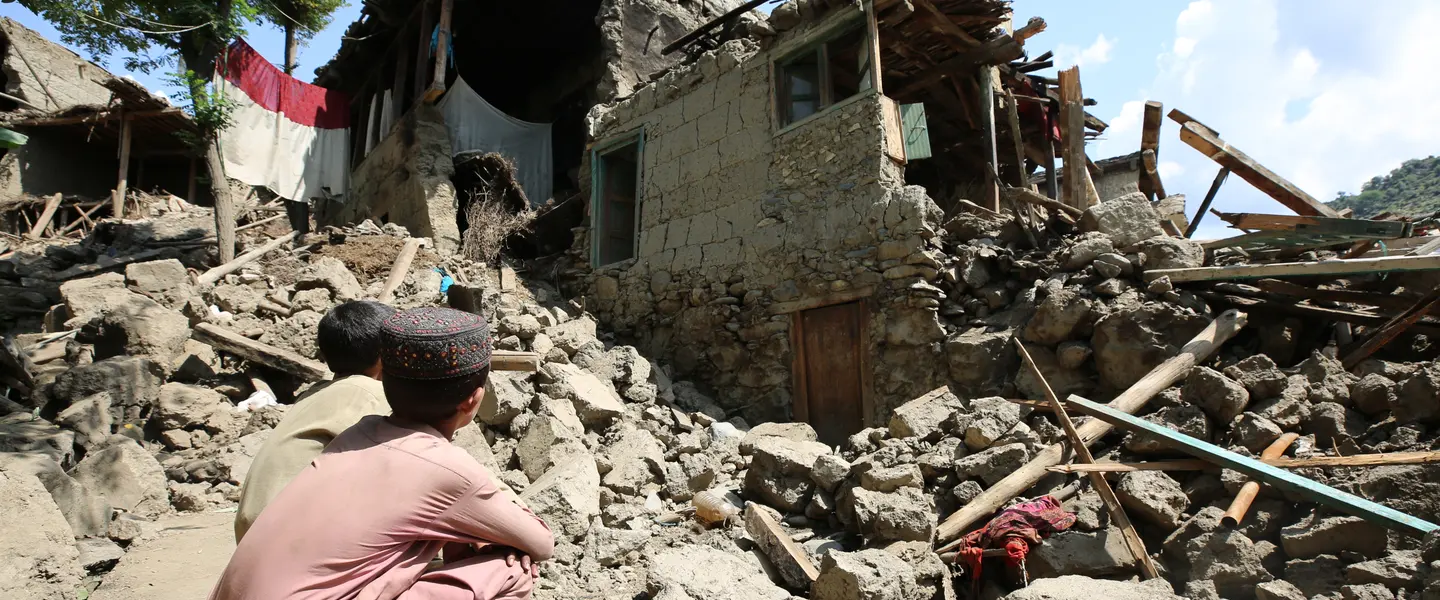
A week after the 6.0 magnitude earthquake struck, tremors are still shaking eastern Afghanistan, where at least 16 health facilities have been damaged, and one completely destroyed, by the quake [4]. This is on top of the closure this year of about 80 clinics or mobile health teams – nearly 9% of the total in eastern Afghanistan – due to cuts in international funding, affecting an estimated 564,000 people.
About 422 health facilities have closed or been suspended across Afghanistan due to funding cuts, reducing life-saving healthcare for about 3 million people [5].
For children, this means fewer health services to screen for and prevent malnutrition – and a reduced ability to intervene at speed, especially in cases of severe malnutrition that require urgent treatment.
The earthquake, that has caused about 2,200 deaths – including about 750 children, according to the UN [2] - came at a time when Afghanistan is struggling with a nationwide child malnutrition crisis. Nearly five million children - or about 20% of children in Afghanistan – are facing 'crisis' or 'emergency' levels of food shortages. It is estimated that 3.5 million of these children could suffer from malnutrition this year [3].
With houses destroyed or too unstable to inhabit, some families are moving into informal camps. Distribution points are providing aid, including food and household items for families. Ebad* managed to save his 11 children during the earthquake but is now living under makeshift shelters having after lost everything:
“Whatever we had in the house went under the rubble - our house things, clothes, blankets, pillows, the food we had. My goats and cows went under the rubble, I couldn't save them. The aftershocks are occurring continuously. The children are afraid from each aftershock and run to their parents.”