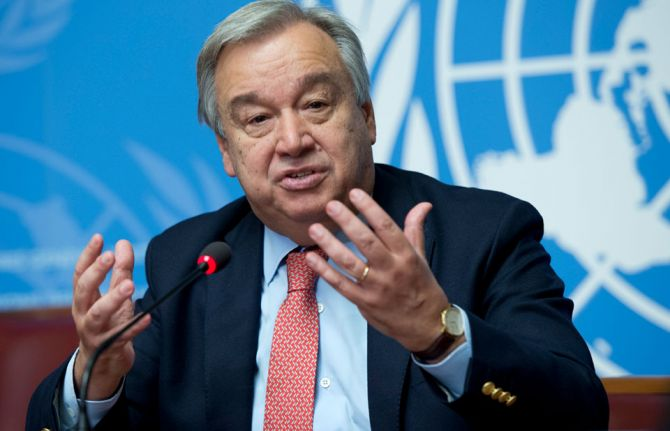
UNAIDS welcomes the release of the United Nations Secretary-General’s report on HIV/AIDS, issued ahead of the UN General Assembly High-Level Meeting on HIV/AIDS taking place in New York on 22–23 June 2026. In the report, UN Secretary-General António Guterres delivers a clear message that the world has made historic gains against HIV, but that the gains are increasingly at risk unless governments urgently recommit to the global AIDS response.
“The global HIV response is at a critical juncture. Progress is real and measurable, but it is increasingly vulnerable to converging crises,” said Mr Guterres, citing declines in external funding, rising debt burdens, humanitarian emergencies and regression in human rights.
The Secretary‑General highlights that 31.6 million of the 40.8 million people living with HIV were on treatment in 2024, the highest number ever recorded and that AIDS‑related deaths have fallen by 54% since 2010, reaching their lowest level since the early 1990s.
The report outlines that countries in eastern and southern Africa—home to the majority of people living with HIV—have led the way. Seven countries in the region achieved the global 95‑95‑95 testing and treatment targets in 2024.
“These achievements are a shining testament of the progress to end AIDS when political leadership, community action and sustained investment come together,” said UNAIDS Executive Director Winnie Byanyima.
However, the report underscores that the world is far off track from the 2025 targets set in the 2021 Political Declaration on HIV/AIDS. Some 9.2 million people still lack access to HIV treatment, around 630,000 people died of AIDS-related illnesses in 2024—double the 2025 target of 250,000 and 1.3 million people became infected with HIV in 2024—3.5 times the 2025 target of 370,000 by 2025.
The report outlines that progress remains uneven. New HIV infections have risen sharply in the Middle East and North Africa (up 94% since 2010) and have increased in Latin America as well as in eastern Europe and central Asia.
The report also warns of the need to confront the structural inequities that undermine access to HIV services, close funding gaps and accelerate the expansion of HIV services in sustainable ways. Adolescent girls and young women in sub-Saharan Africa continue to acquire HIV at three to four times the rate of their male peers.
Key populations and their partners account for 74% of new infections outside sub-Saharan Africa. The Secretary-General warns in the report that declines in external financing for health are projected to drop by up to 40%, with HIV prevention and community-led services most at risk. In western and central Africa, 90% of treatment funding comes from external donors. Prevention programmes in sub-Saharan Africa rely on 80% external funding.