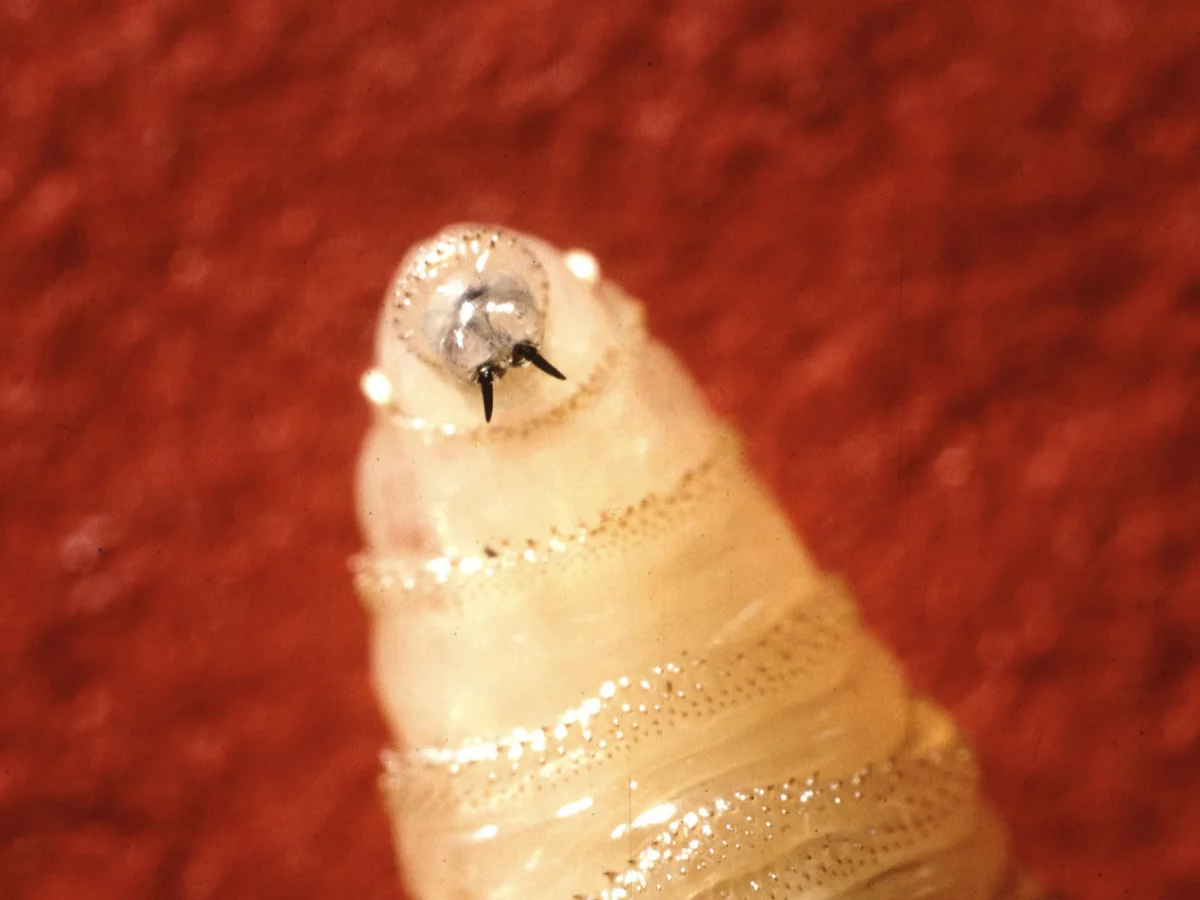
The U.S. has confirmed its first human case of the New World screwworm, a flesh-eating parasite whose northward creep from South America has put the country's cattle industry on high alert in recent months.
The Centers for Disease Control and Prevention (CDC), in coordination with the Maryland Department of Health, confirmed the case on Aug. 4 in a patient who had returned from travel to El Salvador, Department of Health and Human Services spokesperson Andrew Nixon told NPR on Monday.
"This is the first human case of travel-associated New World screwworm myiasis (parasitic infestation of fly larvae) from an outbreak-affected country identified in the United States," Nixon said. "Currently, the risk to public health in the United States from this introduction is very low."
David McAllister, a spokesperson for the Maryland Department of Health, confirmed to NPR that the individual — a resident of Maryland — has recovered from the infection.
"The investigation confirmed there is no indication of transmission to any other individuals or animals," he wrote over email, calling the detection a "timely reminder for health care providers, livestock owners and others to maintain vigilance through routine monitoring."