They said that at the hospital, they would give my child bad injections and he would die,” says Jeanne*, her voice trembling. These words deeply marked this mother whose six year old child showed suspected symptoms of Ebola. Out of fear of treatment centres, she first sought solutions elsewhere. When her child was finally taken to a health facility, his condition was already critical. Forty eight hours later, he died.
Today, Jeanne shares her testimony to prevent other families from experiencing the same tragedy.
It all began with a fever and vomiting. Thinking it was malaria, she opted for self medication. But her child’s condition did not improve. Around her, disinformation portrayed Ebola as a commercial scheme and claimed that patients received lethal injections in treatment centres. These falsehoods fueled her mistrust.
She then consulted a traditional healer her family had relied on before. “I took my son to our healer. I had hope because he had treated our family for a long time,” Jeanne explains.
The child gradually weakened. As his condition worsened, the healer recommended transfer to a health facility. “It was truly painful to lose my child. I deeply regret not going quickly to the health centre,” says the grieving mother.
Her testimony reveals how disinformation can influence decisions about seeking appropriate care.
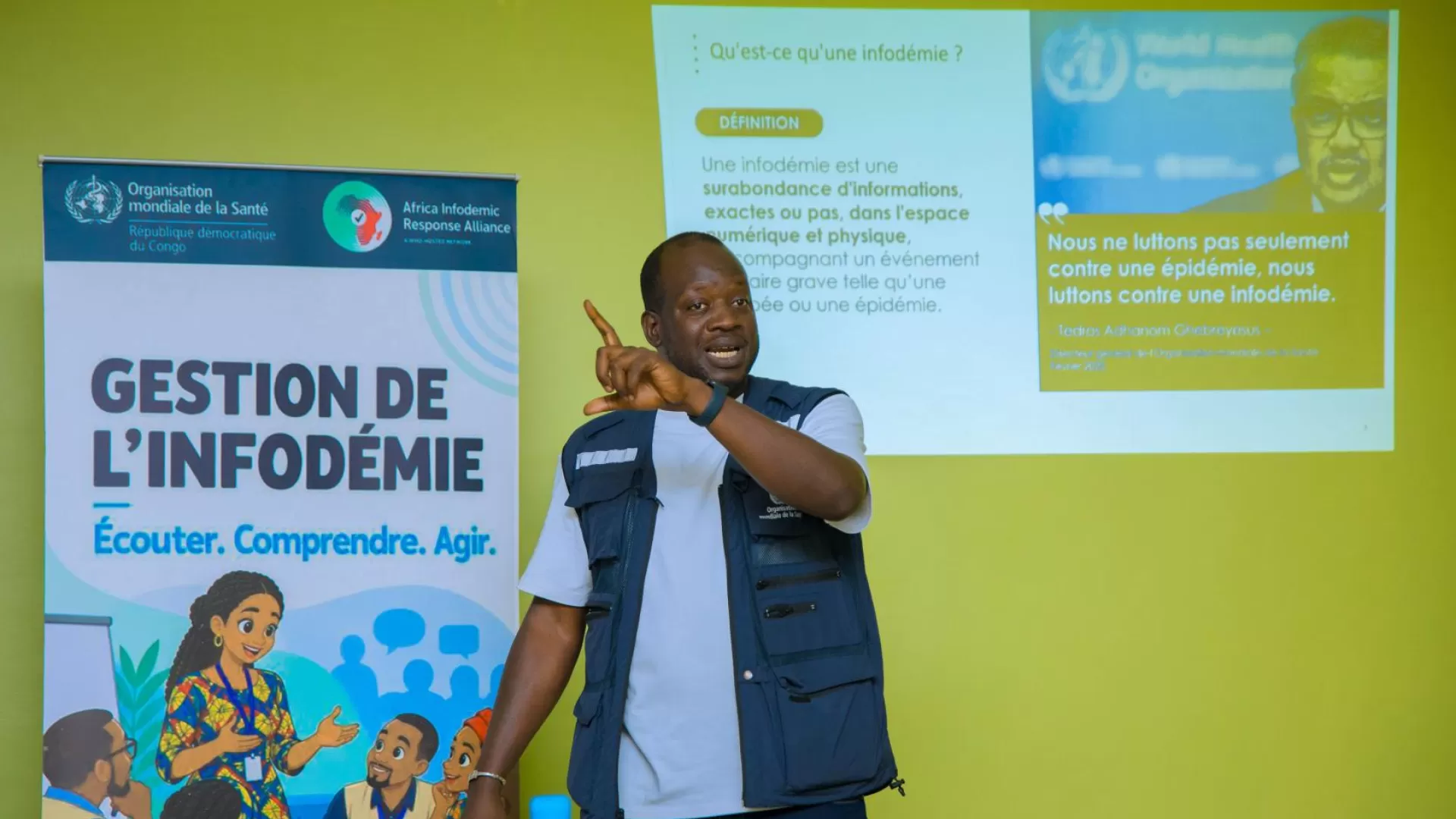
For Salif Diarra, social listening analyst at the World Health Organization (WHO), this story should not be seen as an individual fault. “This mother wanted to protect her child. But rumours fueled fear that influenced her decision. When a family sees the treatment centre as a threat, they may hesitate to seek help, even as their loved one’s condition deteriorates,” he says.