
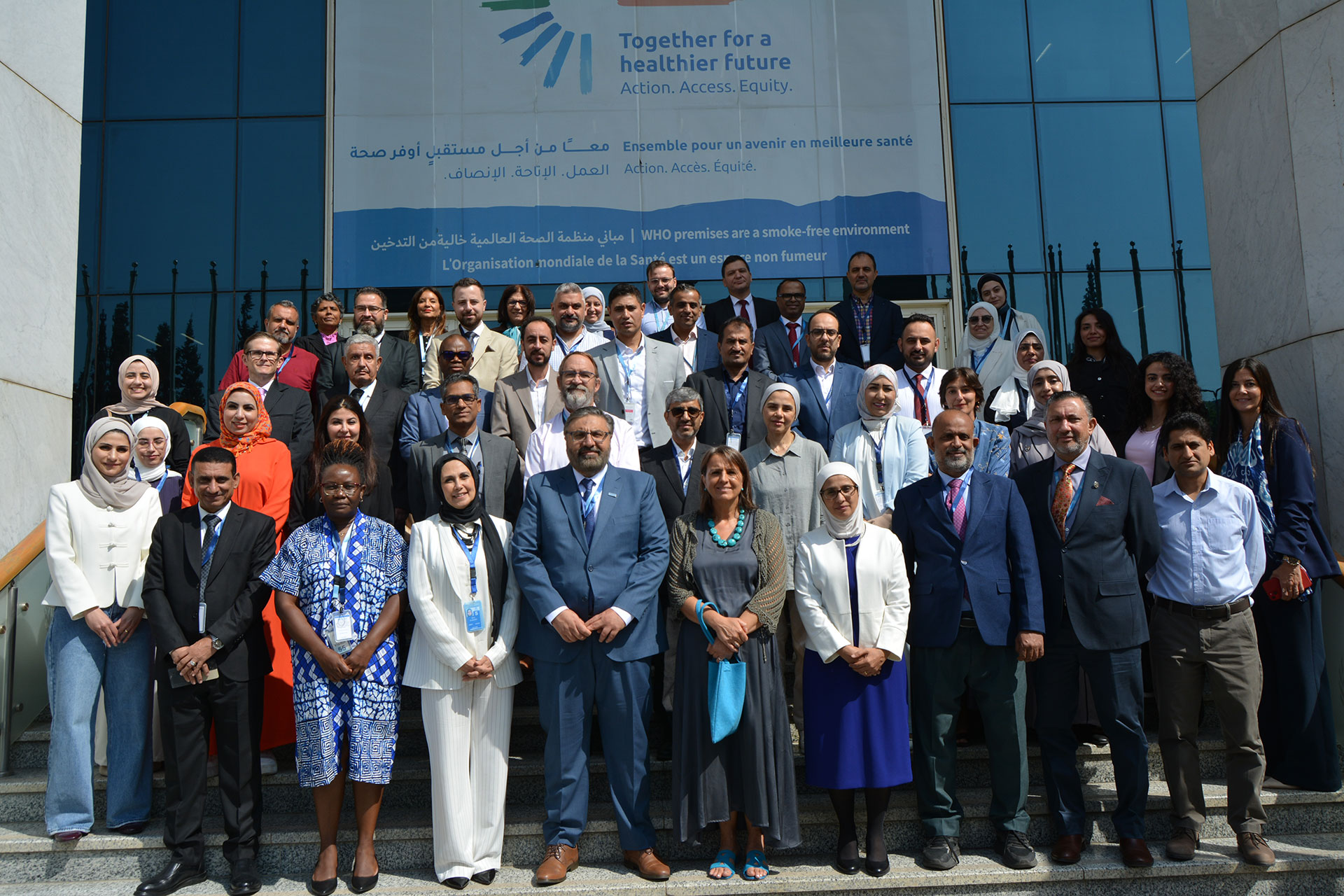
The World Health Organization (WHO) Regional Office for the Eastern Mediterranean, the Global Fund to Fight AIDS, Tuberculosis and Malaria and the International Organization for Migration (IOM) are working together to strengthen integrated disease surveillance across countries supported by the Global Fund Middle East Response (MER) grant.
In fragile and conflict-affected settings, effective disease surveillance is essential for detecting health threats early, generating reliable data for decision-making and ensuring that essential health services can respond to evolving needs.
Through the Global Fund MER grant, countries/territories across the Eastern Mediterranean Region are supported in maintaining and strengthening HIV, tuberculosis (TB) and malaria services, as well as critical health-system functions, such as surveillance and laboratory systems.
Integrating HIV, TB and malaria surveillance with national disease surveillance systems can help countries make better use of data, identify gaps and strengthen planning and response efforts. To advance this work, the WHO Regional Office convened a regional consultation with representatives from MER-supported countries, including Iraq, Jordan, Lebanon, Syria and Yemen.