
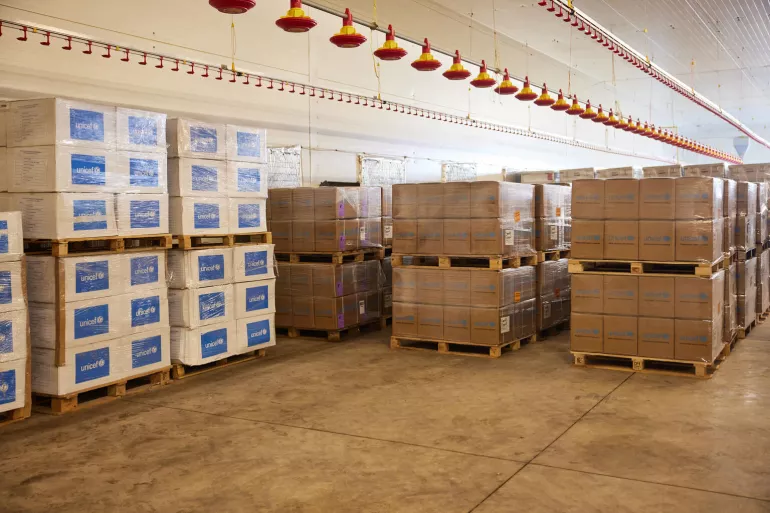
“Nearly 100 days into the latest Middle East escalation, the fallout extends far beyond the region. The disruption to global humanitarian supply chains is impacting children across the globe, with continued congestion in global supply routes, and higher transport costs at all levels.
“Increased transport costs mean less money for the lifesaving supplies children need. These pressures are rendering the margins for error for organizations, like UNICEF, precarious.
“What begins as a disruption to shipping lanes can spiral into a humanitarian crisis. For UNICEF, persistent delays and higher operational costs, when they come in the context of a global funding crisis, are already forcing impossible choices: which children do we reach first?
“Transportation and logistics costs alone are having a tremendous impact. Maritime diversions around the Cape of Good Hope now add two to four weeks to shipping times. Air freight capacity has tightened across Middle East routes, while port congestion is spreading across Africa and beyond. And behind this cascading disruption is a simple, brutal equation: every additional dollar UNICEF spends on transport is one less dollar spent on supplies for children.
“The operational impact in the past few months is already severe. Air freight costs for vaccines from India to Ethiopia, Nigeria, and the Democratic Republic of the Congo have jumped 50 to 70 percent. Trucking costs for Ready-to-Use Therapeutic Food, or RUTF, from Kenya manufacturers to Somalia, South Sudan, and the DRC have climbed 30 percent. Sea freight for education materials from China to Yemen and Mozambique has surged 100 to 150 percent.