In a Region facing protracted crises, fragile infrastructure and deep-seated political uncertainties, long-term strategic planning for public health can easily take a back seat. Yet health care can never be the exclusive concern of health care providers, clinicians and patients. Building stronger, fairer health systems requires the active engagement of multiple sectors, and the committed support of policy-makers.
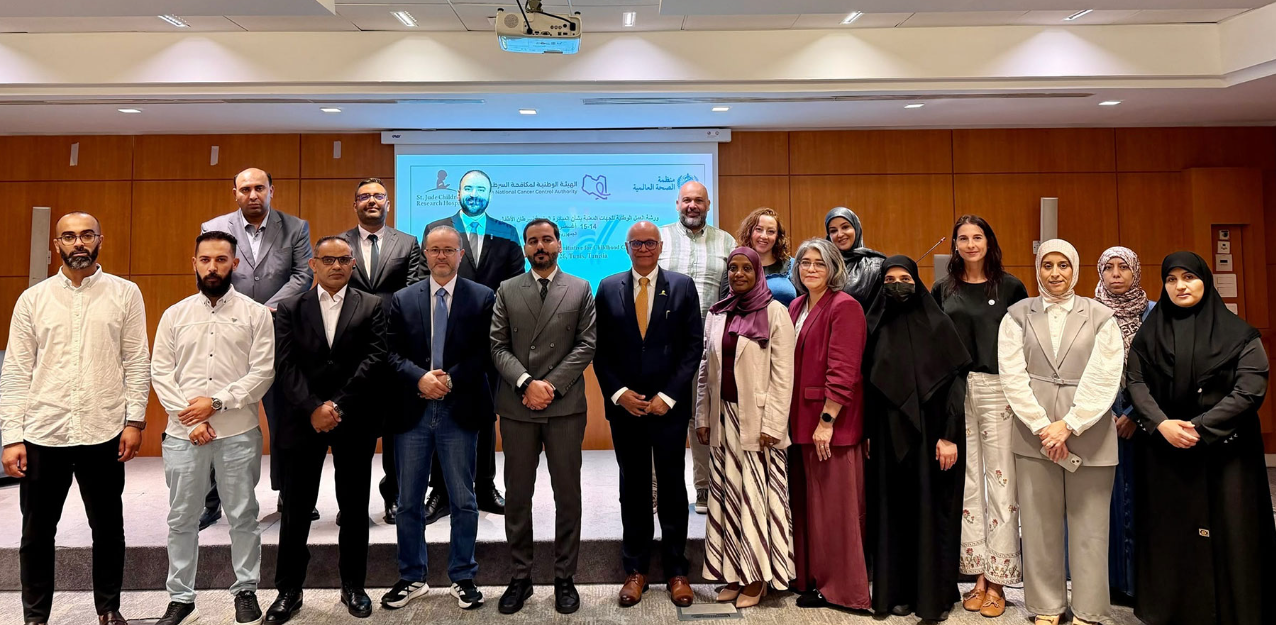
Nowhere is this more evident than in the momentum generated by the Global Initiative for Childhood Cancer (GICC), a collaborative effort between the World Health Organization (WHO) and St Jude Children's Research Hospital, and the way it has galvanized countries to strengthen childhood cancer services and care. Since 2023, we have witnessed a growing wave of commitment as more countries join the initiative. Countries including Syrian Arab Republic, Egypt and Pakistan have conducted national stakeholder workshops in collaboration with St Jude Children’s Research Hospital, the WHO Regional Office for the Eastern Mediterranean and WHO headquarters. The most recent workshop took place in Libya in August.
These workshops are much more than the official beginning of a country's GICC journey. By dismantling professional and institutional silos, the workshops demonstrate how working together yields an exponential impact, paving the way for major advances. One example is the establishment of dedicated pediatric oncology working groups/expert committees directly housed within ministries of health, as has happened in Pakistan and Jordan.
National stakeholder workshops serve as catalysts that drive lasting impact across several core dimensions.
They bring decision-makers into the same room as clinical experts, helping ensure that childhood cancer is recognized as a non-negotiable national priority at the highest levels of governance.
By convening sectors, including social insurance, transportation, education and civil society, they demonstrate that public health does not function in a clinical vacuum but depends on broad collaboration .
The workshops adapt global GICC objectives to fit the unique realities and operational landscapes of individual countries.
By breaking down professional walls, they provide platforms to establish permanent communication channels between disparate institutions.
The stakeholder workshops facilitate the creation of concrete national plans that highlight next steps and milestones, holding countries accountable and setting realistic timeframes.
During the Libya workshop, professionals who have dedicated their lives to childhood cancer in different parts of the country could finally sit down together and talk directly.
“Of course we discussed technical gaps and priorities in childhood cancer services but the real value of the workshop went beyond that. It created connections between people and institutions that really need to work together if we want to improve childhood cancer care nationally,” said Dr Taha Mehemed, Childhood Cancer Focal Point at WHO Libya.