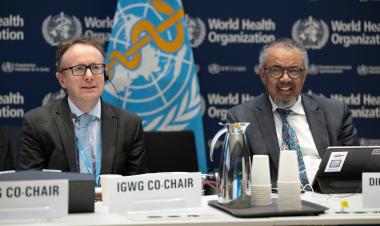

Global health is facing a funding crisis. Aid is shrinking, debt is rising, and the needs are only increasing. According to Christoph Benn of the Joep Lange Institute and Patrik Silborn of UNICEF Afghanistan, health systems will need to fundamentally rethink how they finance and sustain care.
On a recent episode of the Global Health Matters podcast, host Gary Aslanyan was joined by these two experts, who said “innovative finance” has become central to discussions on sustaining health systems.
Benn said that while the term is widely used, few agree on what it actually means. He described it as a “spectrum” of approaches, ranging from philanthropic grants and conditional funding to private-sector investment models that expect financial returns.
“It has frustrated us deeply that so many people are talking about innovative finance, but very few actually know what they’re talking about,” Benn said.
Silborn emphasised that these mechanisms should not be treated as one-size-fits-all solutions. Instead, financing models must be designed around specific problems whether that means raising new funds, improving efficiency, or linking payments to measurable outcomes.
Drawing on his experience in Rwanda, Silborn described how a results-based funding model tied disbursements directly to performance, helping the country to maintain progress against major diseases despite reduced funding.
Both experts stressed that private-sector engagement requires a clear understanding of incentives.