
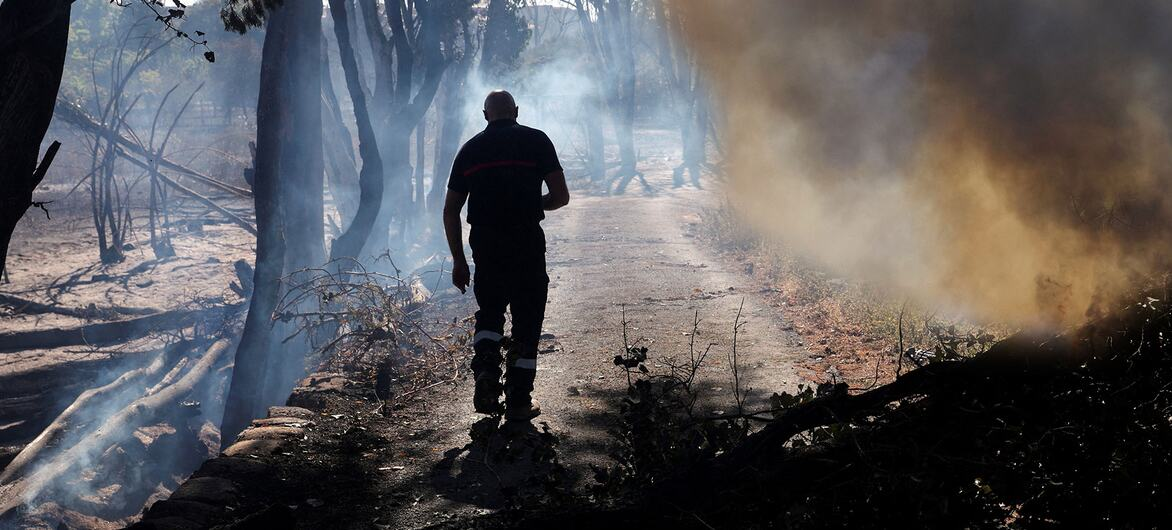
Wildfires are often associated with the destruction they leave behind, but the smoke they produce can pose a serious health threat far beyond the fire zone, the World Health Organization (WHO) has warned.
As large fires burn out of control across parts of Europe and North America this summer, the smoke they generate travels further – across countries and even continents – exposing millions to harmful air pollution.
WHO warns that climate change, prolonged heatwaves, drought and changing land management practices are increasing the frequency and intensity of wildfires, making smoke exposure a growing public health concern.
Although many wildfires are caused by human activity, climate change is creating hotter, drier conditions that allow fires to ignite more easily and spread more rapidly. Because smoke can travel vast distances, poor air quality can affect communities far from an active wildfire for days or even weeks.
Wildfire smoke is a complex mixture of gases and fine particles released when vegetation, buildings and other materials burn. Fires that spread into urban or industrial areas can release additional toxic pollutants.
One of the greatest concerns is fine particulate matter (PM2.5), which can penetrate deep into the lungs and enter the bloodstream.
Exposure can cause coughing, eye and throat irritation, headaches, wheezing and shortness of breath, while worsening asthma and other chronic conditions.
Infants and young children – whose lungs are still developing – older people, pregnant women, people with disabilities and those living in poorly insulated homes are among the most vulnerable to smoke exposure.
Emergency responders and outdoor workers also face heightened risks because of prolonged exposure. Wildfires also take a psychological toll, contributing to stress, anxiety and trauma during and after emergencies.