
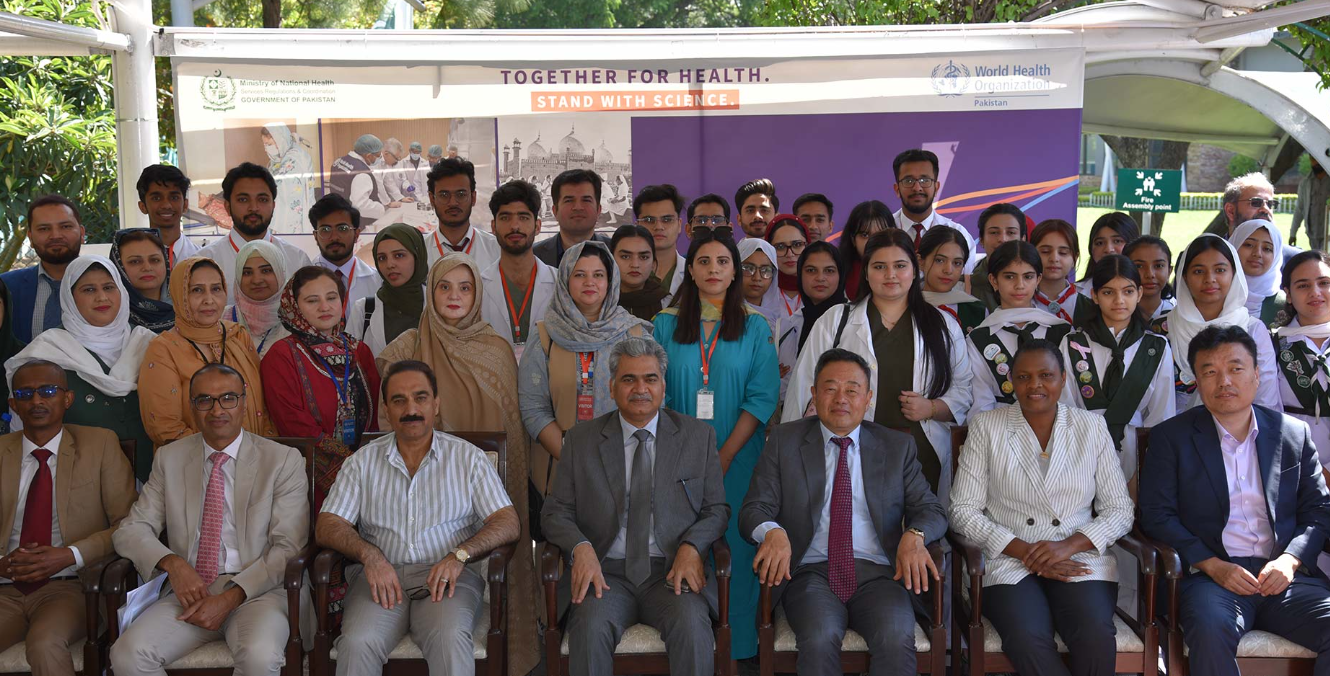
The World Health Organization (WHO) and Pakistan’s Ministry of National Health Services, Regulations and Coordination today commemorated World Health Day, underlining how over the past 8 decades, medical science has saved and protected millions of lives in the country each year. Thanks to medical science, Pakistan has achieved major milestones such as protecting millions of children from vaccine-preventable diseases, eradicating smallpox and preventing and treating deadly health conditions such as tuberculosis, polio, cancer, diabetes, hepatitis C, malaria, and severe acute malnutrition, among many others.
“Trusting and following medical science is not an option. Our future, and the future of our families depend on it. 78 On 7 April, years ago, Pakistan was among the 61 Member States that paved the way and ratified the constitution of WHO with a clear unified mandate – promoting a healthier and safer world for all. Today, more than 190 countries are members of WHO. Today, Pakistan’s determination and commitment to WHO and to promoting global health are as strong as on the first day,” said Pakistan’s Secretary Health Muhammad Aslam Ghauri.
“If we look back over the last 78 years, we can see how the power of science and international health cooperation has improved our health and our lives in countless ways, including the prevention and treatment of deadly diseases that 8 decades ago had no cure. In the age after the constitution of the World Health Organization, science has made it possible to cure deadly diseases such as malaria, tuberculosis and hepatitis C. We can now treat cancer and even prevent certain types such as cervical cancer.”
Secretary Health also emphasized “the importance of the One Health approach to sustainably balance the health of people, animals and ecosystems, since, thanks to science, we know that we are all interconnected.”