
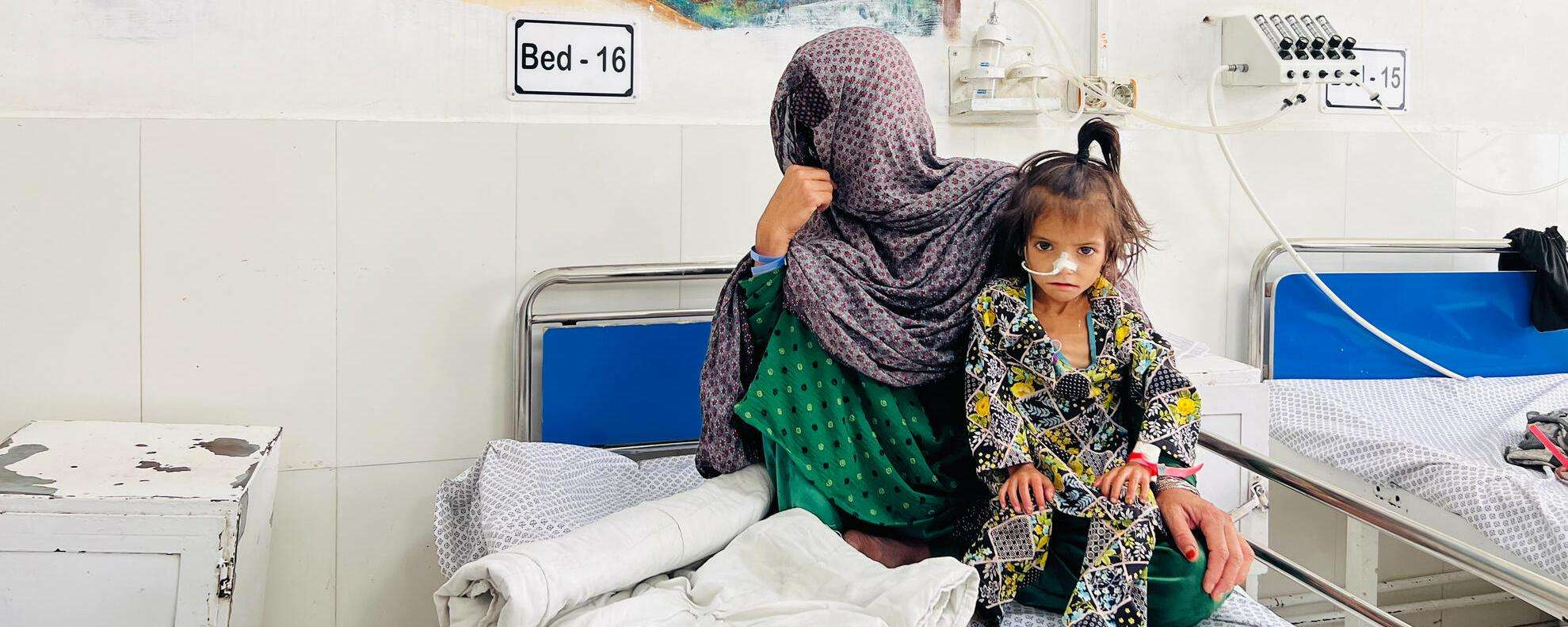
Ahmad was born “weak and thin,” says his mother Nazia at an inpatient therapeutic feeding center run by Doctors Without Borders/Médecins Sans Frontières (MSF) in Afghanistan’s Kandahar province.
Eighteen-month-old Ahmad was admitted with severe acute malnutrition and diarrhea. Nazia was unable to breastfeed him and says she did not have enough food for herself. She used to soak bread in tea or bean soup to try to feed her son. “I could not even afford sugar for the tea,” she says.
Ahmad has been receiving treatment at the center for six days and his condition is improving, but Nazia, who is pregnant with her sixth child, worries that her next baby may face the same difficulties. “We do not have proper food at home,” she says. “In the past, my husband used to go out to work, and he would bring something to eat. Now he leaves for two or three weeks looking for work but comes home empty-handed.”
Ana Banda, MSF medical coordinator in AfghanistanWe can treat children for severe acute malnutrition, but when they return home, many families are still facing the same difficulties. Without adequate nutrition and access to follow-up care, children remain at risk of becoming malnourished again.
In Helmand province, Parwana, a mother of seven who is eight months pregnant, is facing similar difficulties. Her 5-year-old daughter, Robina, has been admitted to Boost Hospital's therapeutic feeding center for the third time with severe acute malnutrition and medical complications. Having already lost one child to severe acute malnutrition, Parwana fears for her unborn baby. “I cannot afford to get food for my children, and now I am worried about the baby I am expecting,” she says.