
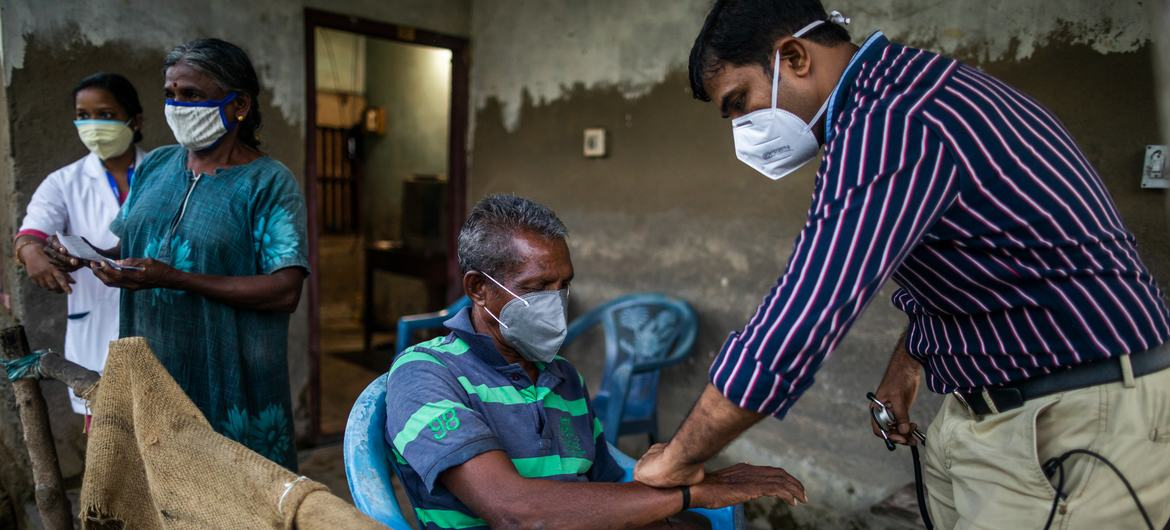
Six years after COVID-19 killed millions, battered health systems, disrupted lives and brought the global economy to a virtual standstill, the world is still grappling with how we can prepare better for the next pandemic.
The need is even greater amid growing threats to global stability and security from emerging infectious diseases as well as climate-related crises and conflicts.
Over seven million lives were lost due to COVID-19, according to the UN World Health Organization (WHO).
The pandemic did not just claim lives. It shattered economies, disrupted entire health systems and exposed how unevenly rich and poor countries could access vaccines, tests and treatments.
The global response to the pandemic was described by UN Secretary-General António Guterres as a “story of human ingenuity and human failure”. Vaccines were developed at record speed, but the lack of preparedness meant the most vulnerable had the least access to care and suffered most.
Viruses, like COVID-19, do not respect borders.
An outbreak detected in one country can quickly spread across the world, putting people everywhere at risk.
That makes surveillance, data sharing, research and development – as well as access to vaccines, diagnostics and treatments – all international priorities.
It’s also why human, animal and environmental health are now treated as one connected system. Over 60 per cent of emerging infectious diseases jump to humans from animals, so rigorous surveillance at that human-animal-environment interface is critical.