
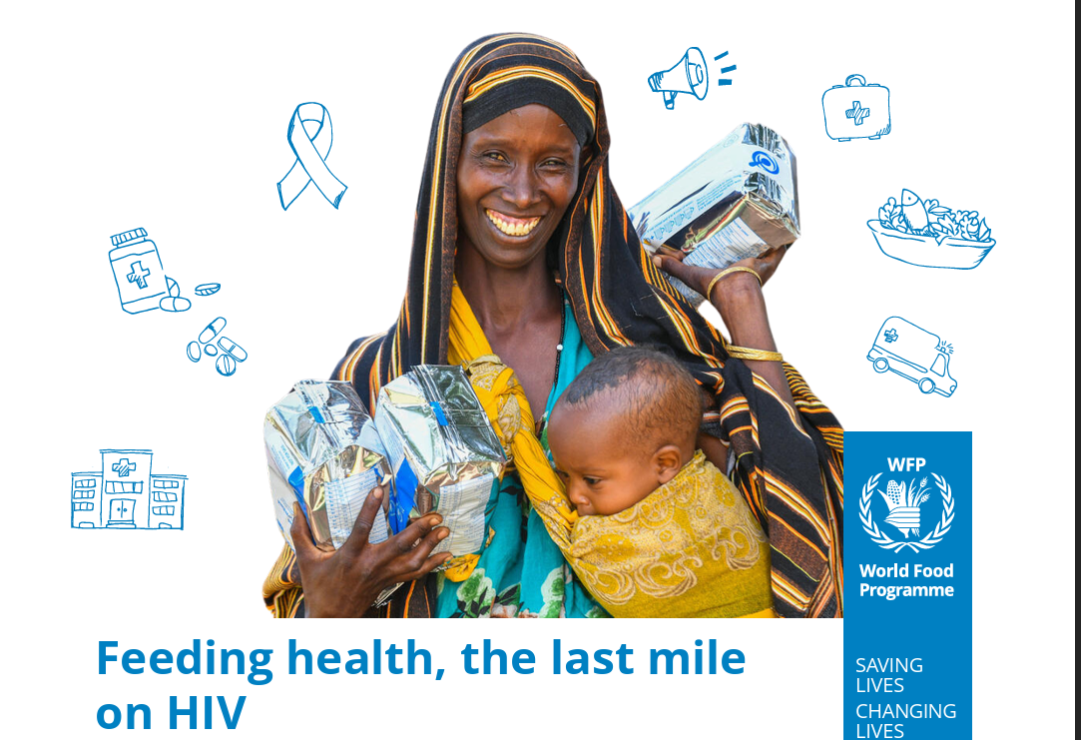
HIV remains one of the world’s most persistent public health challenges. More than 40 million people are living with HIV, including 1.7 million children under 15. Each year, 1.3 million people acquire HIV, and 630,000 die from AIDS-related illnesses.
Food insecurity and HIV are deeply connected. People living with HIV need higher levels of nutrition, yet the virus often reduces appetite and the body’s ability to absorb nutrients. Without adequate food, antiretroviral treatment becomes harder to tolerate and less effective, which leads to poor adherence and worse health outcomes.
HIV also strains livelihoods through income loss and higher medical expenses, pushing households into hunger and malnutrition. When families face food insecurity, they may adopt coping strategies that increase their exposure to HIV and worsen their vulnerability.
As a UNAIDS cosponsor and the world’s largest humanitarian organization fighting hunger, the World Food Programme (WFP) has a unique responsibility: ensuring that people living with HIV can access the nutritious foods essential for survival, health, and resilience.