
Mental health and psychosocial support (MHPSS) are recognized as essential components of humanitarian response and health programming, especially in challenging contexts like Afghanistan.
UNFPA is committed to coordinating and providing health, mental health, and psychosocial support services in Afghanistan, recognizing the disproportionate impact of psychosocial stressors on vulnerable women and girls. Limited mobility, poor living conditions, unemployment, illiteracy, and gender-based discrimination are all factors that contribute to the psychological distress faced by women who often have limited access to life-saving services.
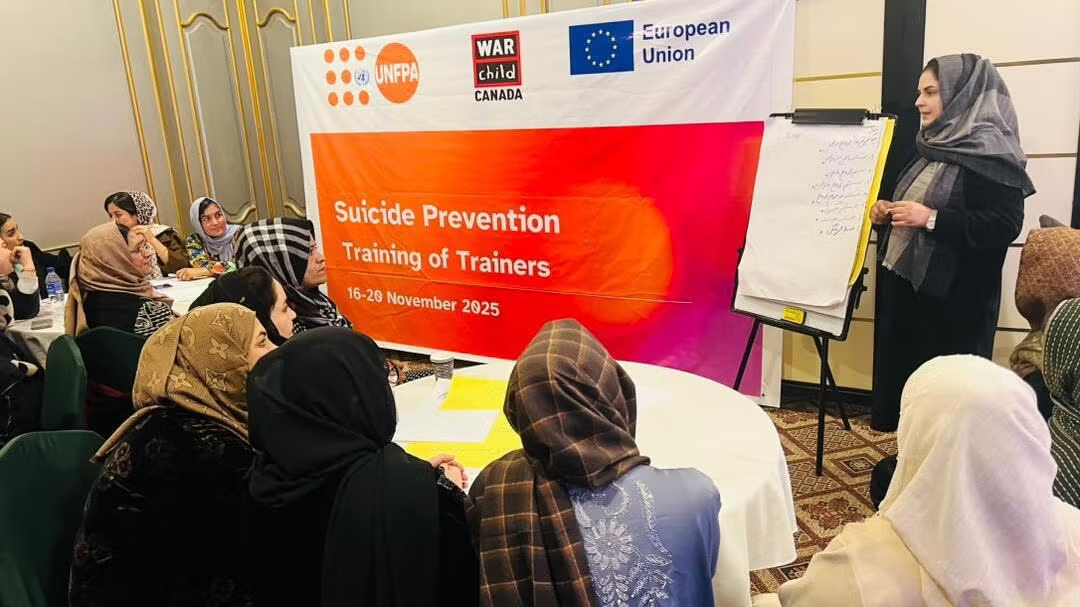
To bolster the capacity of local health care service providers in addressing the critical issue of suicide, UNFPA, with the support of the European Commission's Civil Protection and Humanitarian Aid Operations (DG ECHO), conducted a five-day Suicide Prevention Training of Trainers (TOT) in Kabul.
Addressing a vital need
The TOT was specifically designed to strengthen the capacity of selected staff to deliver high-quality suicide prevention training within their operational areas. Participants were equipped with advanced knowledge, practical skills, and facilitation techniques necessary for identifying, responding to, and making appropriate referrals for individuals at risk of suicide.
Organized by UNFPA’s implementing partner, War Child Canada, the intensive training took place from 16 to 20 November 2025 in Kabul and brought together 26 participants from various implementing partners. Technical guidance for the training was provided by the MHPSS Specialist from UNFPA.
Key Training Outcomes
The comprehensive training covered a wide range of objectives, including: