
From central Peshawar, a northwestern city in Pakistan’s Khyber Pakhtunkhwa province known as the “City of Flowers”, the road heads south towards Bara tehsil in Khyber tribal district. The journey takes around 35 to 45 minutes, covering roughly 22 kilometres. Along the way, it passes through Bara Bazaar, the area’s main commercial hub, which remained closed for more than six years during anti-militancy operations before reopening in 2015.
Five to ten minutes beyond the bazaar, Dogra Hospital comes into view on the left, a vital lifeline for communities in Bara tehsil (sub-district) and surrounding areas.
Once inside the main gate, the road turns left, passing the cutaneous leishmaniasis clinic before reaching two neighbouring facilities: a Médecins Sans Frontières (MSF) supported maternity and newborn care unit.
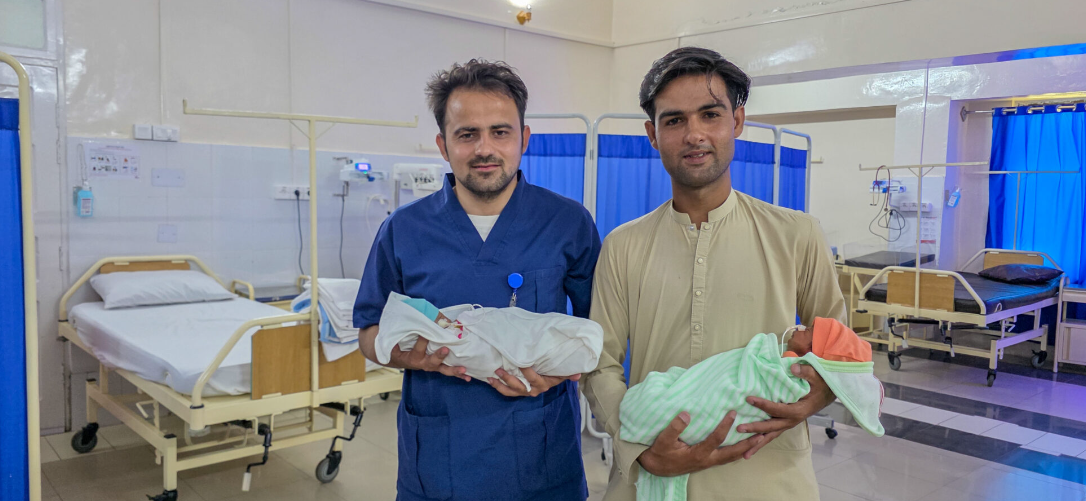
At the entrance to the newborn unit, the hums and cries of babies fill the background as Nizam Khan and his sister, Reema, from Batatal, a locality near Peshawar, prepare to leave.
In their arms are twin baby boys who are finally going home after 24 days of life-saving care. For the family, the long wait is over. But reaching this moment was not easy.
Reema had travelled to a public hospital in Peshawar to give birth to her twins. Both boys were born prematurely at 32 weeks of pregnancy, weighing approximately 1.55 and 1.5 kilograms.
The babies needed to be admitted to the nursery, but due to a lack of space at that hospital and another public health facility the family approached, they had to take the twins to a private facility, where the babies stayed for three days.
At the private facility, the cost of treatment became difficult to manage. Reema’s husband is a daily wage worker, and the family had to take out a loan to pay for the babies’ care.