
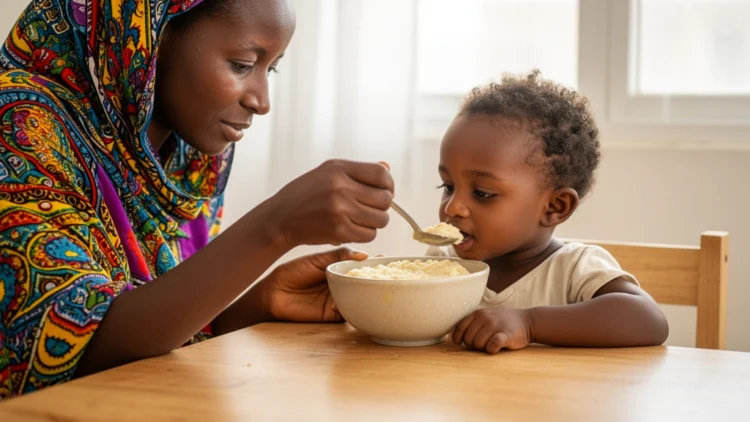
In Somalia, where an estimated sixty-three percent of children under five suffer from severe food poverty according to a 2024 UNICEF assessment, child malnutrition is driven not solely by material deprivation but also by deeply rooted cultural traditions and maternal feeding customs. A comprehensive narrative review conducted by Ibrahim Abubakar Abdi of the Department of Health Sciences at Al Hayat Medical University in Mogadishu indicates that maternal dietary choices and infant-feeding decisions are structured by an intricate matrix of cultural norms, religious interpretations, and intergenerational authority. Published in Frontiers in Public Health, the scientific synthesis collates peer-reviewed literature across public health, nutritional science, and anthropology to characterize how cultural dynamics intersect with systemic adversity. By evaluating empirical studies and comparative regional investigations, the review demonstrates that cultural traditions regarding breastfeeding initiation, dietary taboos during reproduction, religious fasting practices, intra-household food prioritization, and elder decision-making substantially govern the nutritional intake and developmental trajectories of young Somali children across varied geographic and humanitarian settings.
The epidemiological context of Somalia reveals a protracted nutritional emergency marked by severe vulnerabilities across early developmental stages. Nationally representative data from the 2019 Somalia Micronutrient Survey documented an overall stunting prevalence of seventeen point two percent with a ninety-five percent confidence interval between fifteen point zero and nineteen point six percent, alongside an acute wasting prevalence of eleven point zero percent ranging from nine point three to twelve point nine percent among children younger than five. Longitudinal investigations within the Bay and Hiran regions recorded an escalation in child wasting from twelve point nine percent at midline evaluations to fourteen point four percent at endline, with the burden concentrating disproportionately in Hiran. Scopus-indexed analyses of the national survey data by Donkor and colleagues encompassing nineteen hundred and forty-seven children highlighted that severe food insecurity, male sex, diarrheal illnesses, and suboptimal breastfeeding independently multiplied stunting and wasting probabilities. While recurring droughts, seasonal floods, and ongoing armed conflicts precipitate acute peaks in malnutrition, the author notes that cultural norms dictate daily feeding behavior and caregiving responses.