
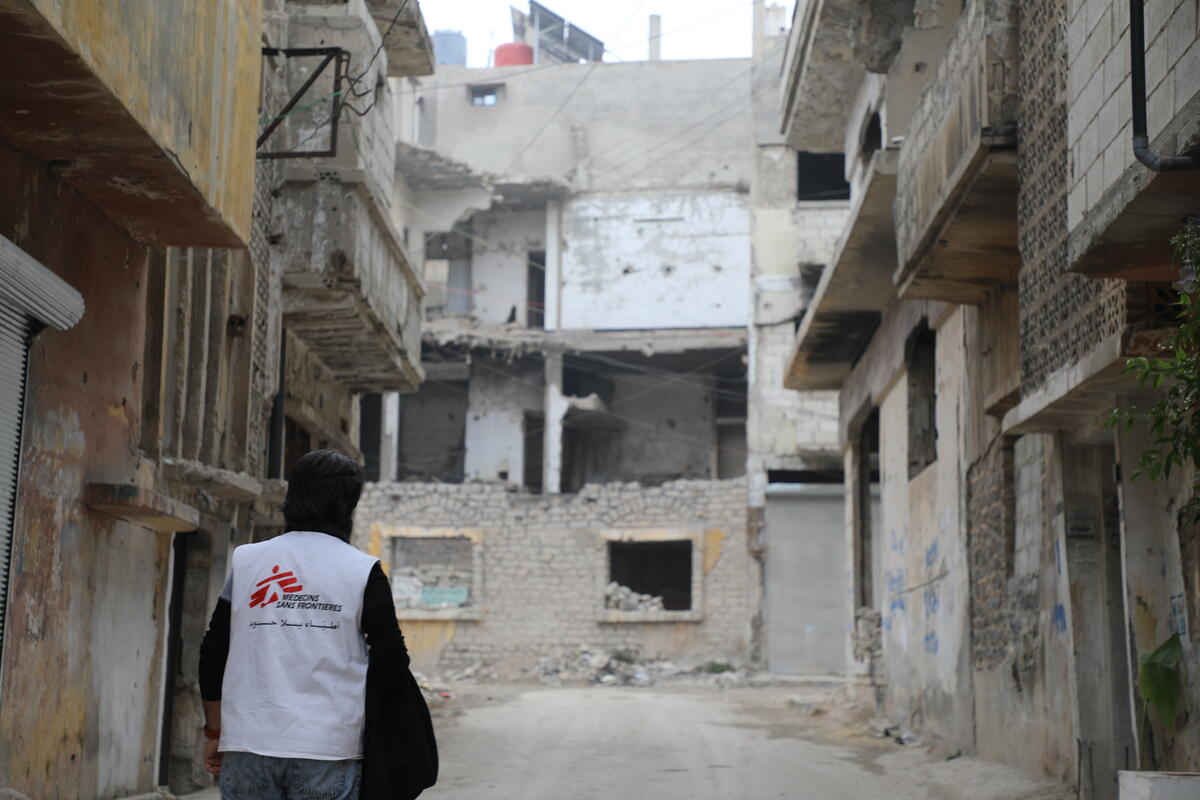
After years of displacement, many displaced Syrians are beginning to return to their home cities, determined to rebuild their lives in the rubble of war. But as the patterns of movement shift, so do the health care needs of communities facing a lack of functioning health services.
What was once addressed primarily through camp-based clinics and humanitarian health posts in northwest Syria, is now surfacing within rural and urban neighborhoods still struggling to recover from years of conflict and underinvestment. The movement of people is not just a return home; it brings chronic illnesses, interrupted treatments, urgent maternal health needs, psychological trauma, and deep economic vulnerability to cities with fragile and under-resourced health systems. As more people return home, the burden is steadily shifting from temporary camp services to permanent urban facilities, demanding new approaches on how and where to deliver care. “The day after the liberation, I returned back home,” says Aisha, a mother visiting the Doctors Without Borders/Médecins Sans Frontières (MSF)-supported Khalediya Primary Healthcare Center (PHCC) in Homs. “I went to see what was left of it; it had been damaged. I tried to repair what I could, and I’ve been living here.”