
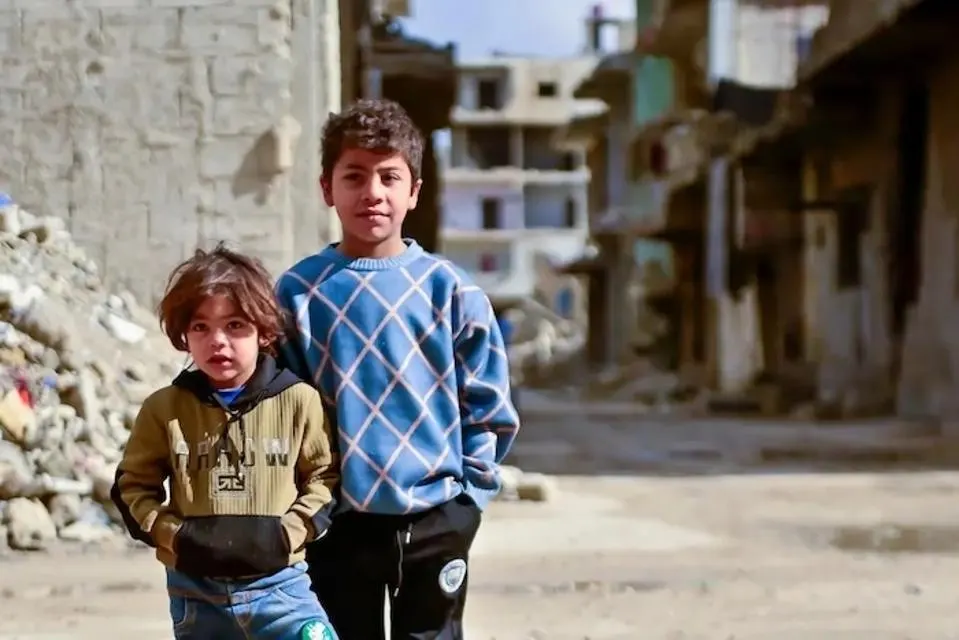
After more than a decade of war, essential services in Syria are in urgent need of repair. With support from partners, UNICEF restored the main sewage network in Tadamon, a densely populated area in Damascus, reducing disease risks, improving daily living conditions and supporting community recovery and resilience.
Years of conflict have severely damaged essential public services across Syria, with water and sanitation systems among the most affected. In Tadamon, a densely populated neighborhood in Damascus that experienced intense fighting, large parts of the sewage network were destroyed. As security conditions improved and families began returning, the deteriorated sanitation system posed growing public health risks, particularly for children and women.
“My brother and I used to help each other jump over sewage floods while holding our noses because of the bad smell," says 12-year-old Ayham.
Limited financial resources prevented local sanitation authorities from carrying out urgent repairs. As a result, sewage blockages and overflows became widespread, increasing the risk of wastewater contaminating drinking water sources and heightening the likelihood of outbreaks of diarrhea, hepatitis A and other waterborne diseases in an already vulnerable community.
"My children used to get sick all the time, particularly with breathing problems. When sewage flooded the streets, germs spread everywhere," says Abdulrazak, the father of 5-year-old Nasser.