
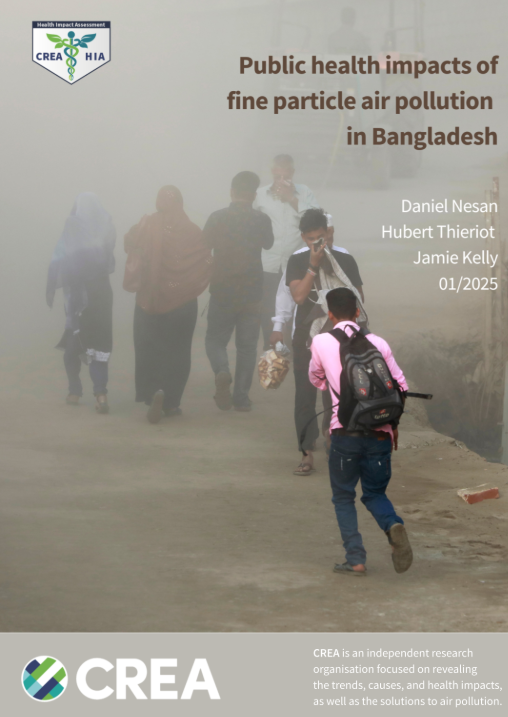
Bangladesh, one of the fastest-growing economies in the world, is facing a severe air pollution crisis. In 2023, it was ranked the most polluted country globally, with an annual average fine particulate matter (PM2.5) concentration of 79.9 µg/m³—more than double the national standard of 35 µg/m³ and 15 times the World Health Organization’s (WHO) guideline of 5 µg/m³ (IQ Air, 2023).
The consequences of this extreme pollution are staggering: air pollution has become the leading risk factor for death in the country, cutting the average life expectancy by nearly five years (AQLI). Studies estimate that air pollution contributes to over 200,000 deaths annually in Bangladesh (World Bank). PM2.5 is a known trigger for respiratory and cardiovascular diseases, strokes, and lung cancer. Among children, it exacerbates asthma, stunting, and cognitive impairment, while in newborns, it is linked to low birth weight and premature birth.
These health burdens also come with economic costs, including higher healthcare expenses and reduced productivity, which in 2019 amounted to 11 billion USD or 4.4–4.8% of the country’s GDP (World Bank).
This health impact assessment (HIA) further assesses the consequences of such extreme pollution. Meeting Bangladesh’s national air quality standard could reduce deaths by 19%, while meeting the WHO 2021 guideline would reduce deaths by 79%, that is, 81,282 lives each year, and eliminate almost all asthma-related emergency visits and preterm births, as well as avoid 262 million annual sick leave days. Adherence to this standard would also reduce Years of Life Lost (YLL) by 21% and Years Lived with Disability (YLD) by 12%.