
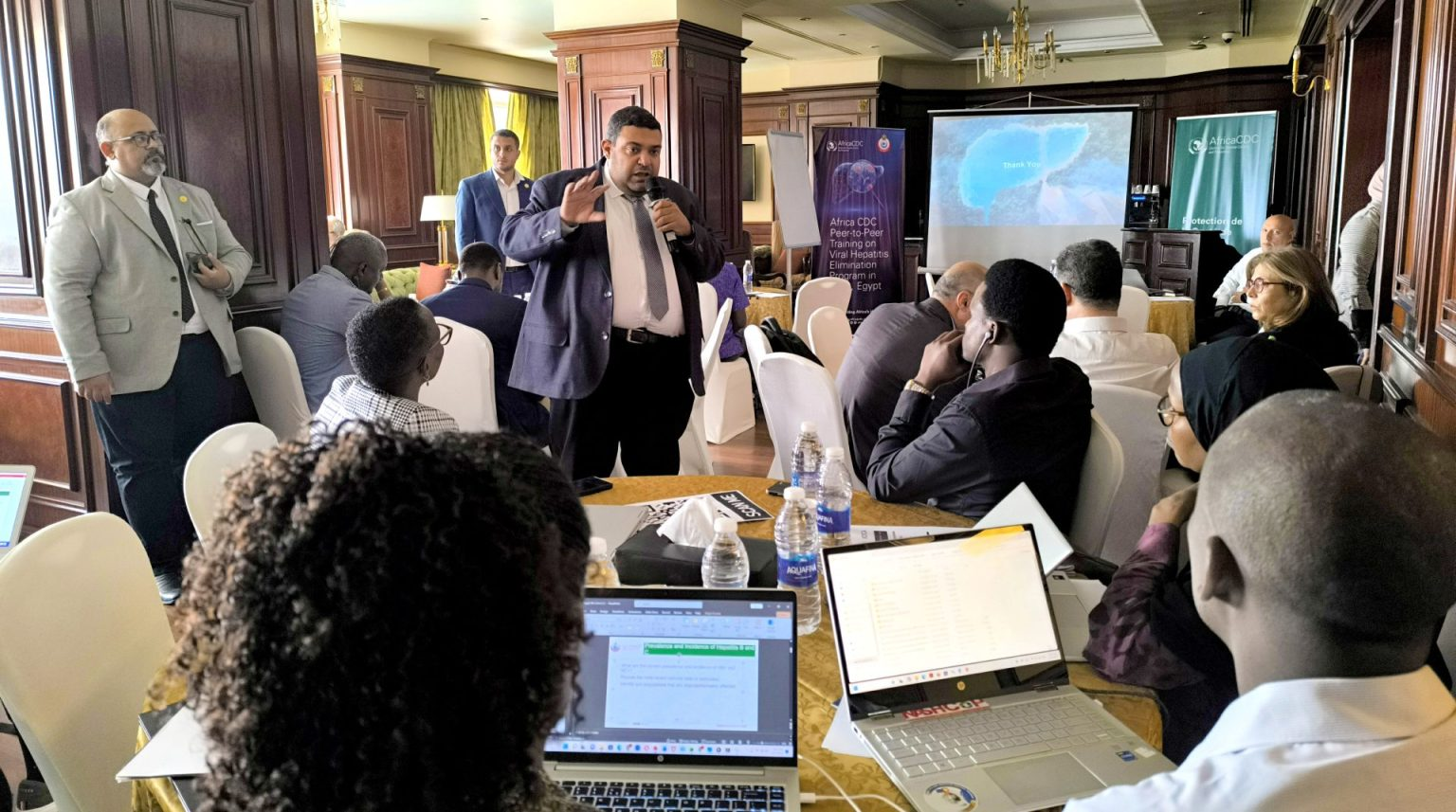
Programme managers from nine African Union (AU) Member States completed the latest five-day peer learning workshop, strengthening their technical and operational capacity in viral hepatitis prevention and control.
This brings the total to 132 programme managers from 32 AU Member States, trained across five cohorts under an initiative funded by the Korea International Cooperation Agency (KOICA) and led by the Africa Centres for Disease Control and Prevention (Africa CDC).
The initiative focuses on strengthening national hepatitis prevention, diagnosis, treatment and surveillance systems through peer-to-peer learning and the exchange of best practices, contributing to continental efforts to eliminate viral hepatitis as a public health threat by 2030.
Viral hepatitis is an inflammation of the liver caused by viral infection, often progressing silently with few early symptoms such as fatigue, fever, nausea, abdominal pain and jaundice. If undiagnosed or untreated, it can lead to severe liver damage, cirrhosis, liver cancer and death, making it a significant public health threat across Africa.
In response, the African Union and Africa CDC are supporting Member States to scale up evidence-based prevention, diagnosis and treatment efforts in line with the World Health Organization (WHO) 2030 hepatitis elimination targets.
The workshop, held in Cairo from 20–25 June, brought together 24 programme managers from the Central African Republic, Gabon, Kenya, Liberia, Libya, Madagascar, Tanzania, Tunisia and Zambia.
Organised in partnership with Egypt’s Ministry of Health and Population, it provided a structured exchange on Egypt’s hepatitis C response, which in 2023 became the first in the world to achieve the WHO’s Gold Tier status on the path to hepatitis C elimination.