
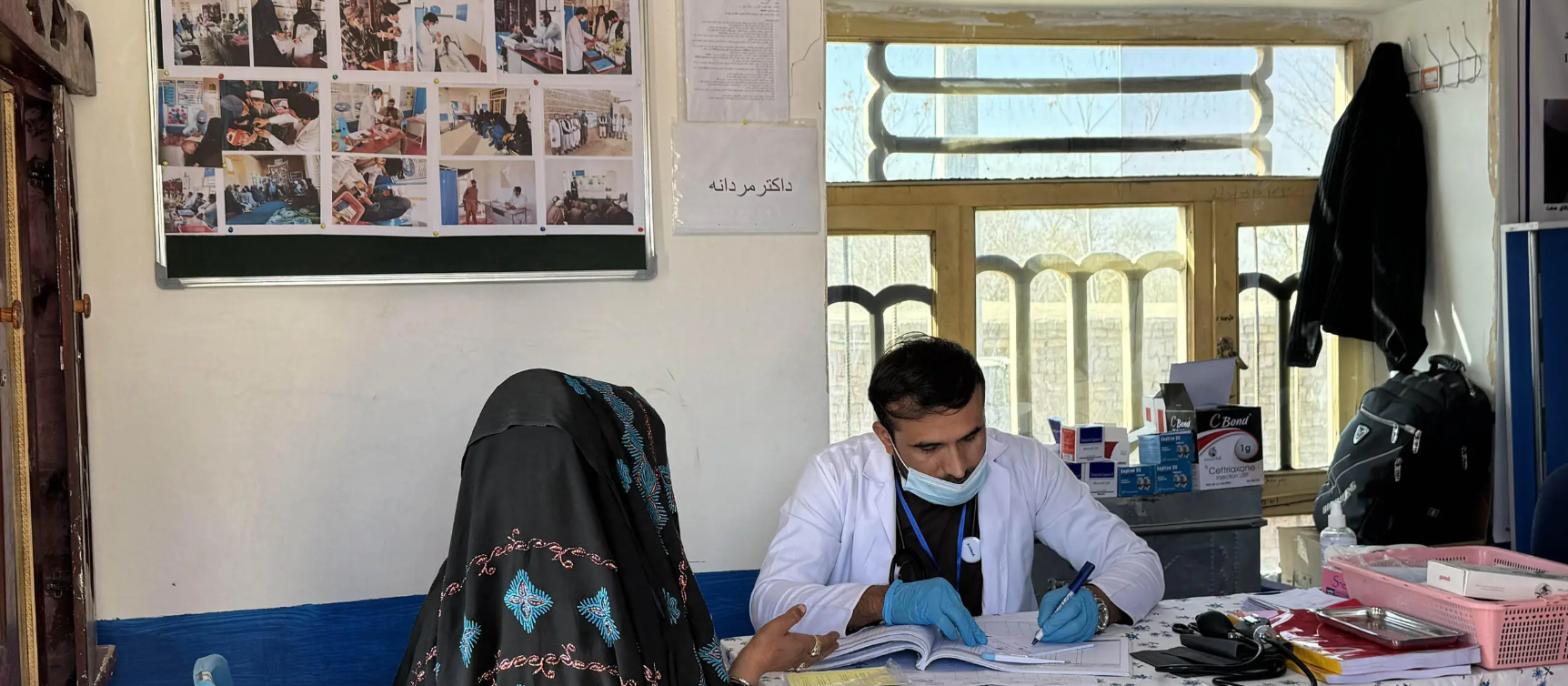
A few months ago, 19-year-old Bibi Nooria had little hope. She was pregnant with her third child during a searing heatwave in Afghanistan’s Takhar Province, and she had limited access to food, water and healthcare.
Fortunately, a Mobile Health and Nutrition Team, supported by the OCHA-managed Afghanistan Humanitarian Fund (AHF) and the UN Global Emergency Fund (CERF) reached her village just in time. They transported Nooria to a health facility, where she safely delivered a healthy baby. She received postnatal care, newborn vaccinations and family planning counselling.
The medical team also helped her family to prepare for the evolving drought. People battling Afghanistan’s drought-like conditions for the fourth consecutive year have exhausted their reserves.
Afghanistan is among the countries most vulnerable to climate change. About 80 per cent of rural households make a living from agriculture, which has been decimated by insufficient rainfall. Crop failures and declining water levels have pushed food insecurity to alarming levels.