
Situation Update
As of 17 April, a 10-day ceasefire is in effect, resulting in a temporary and fragile cessation in hostilities. Some displaced families have begun return-ing to their areas of origin, despite ongoing security concerns and extensive damage to infrastructure. The situation remains volatile, with contin-ued risks of ceasefire violations and uncertainty regarding its sustainability.
Returns are occurring in a high-risk context, marked by the presence of unexploded ordnance (UXOs), increased vulnerability to communicable disease outbreaks due to disrupted WASH conditions, and limited availability of essential services. These factors pose serious safety and public health risks for returnees and further constrain access to healthcare, particularly in damaged and underserved return areas.
Fifty-one Primary Health Care Centers (PHCCs) remain closed, while eight PHCCs are operational for chronic disease management and emergency care only, placing additional strain on remaining functional facilities and limiting access to care, especially in areas of return.
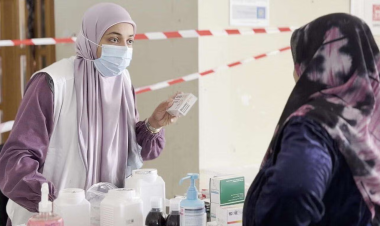
In response to ongoing needs in conflict-affected border areas, Inter-Agency Reproductive Health (IARH) kits were delivered to health facilities serving impacted villages. This was complemented by emergency obstetric care training for 22 healthcare providers who remain operational in these locations, strengthening local capacity to deliver essential maternal health services amid access and referral constraints.