
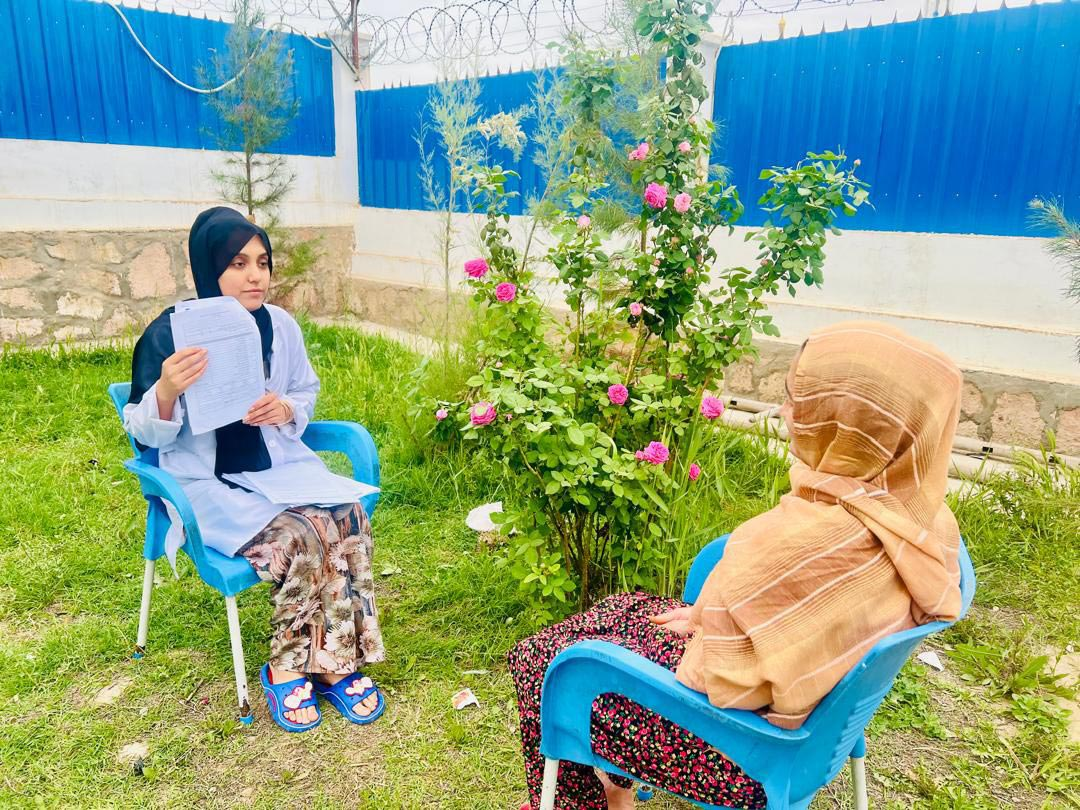
In Khan Charbagh village in Andkhoy District, 38-year-old Fatima* was raising her children amid poverty and in a home marred by violence due to her husband’s drug dependence. Feeling unable to cope, Fatima also started using drugs. What had at first seemed a temporary escape gradually became dependence, affecting her health, confidence and ability to care for her family.
“I lost hope that my life could change,” says Fatima. “Every day felt like a struggle, and I couldn’t see a way forward.”
Fatima’s life began to change when she reached out to drug dependence treatment services funded by the Government of Japan and delivered with WHO support. A community outreach team listened to her concerns and discussed treatment with her. For the first time, Fatima felt that recovery was possible.
Fatima and the team agreed she should be referred to the 20-bed Women and Children Drug Treatment Centre in Faryab Province. There, she received medical care, psychological counselling, life-skills education and psychosocial support.
Recovery was not easy. Fatima had to address both her dependence and the difficult circumstances in which she lived. Through counselling and rehabilitation, she gradually learned healthier ways to cope with stress and began to regain control of her life.
By the time she completed the programme, Fatima was no longer using drugs. More importantly, she was once again thinking about her children, her future and the life she wanted to rebuild. Today, Fatima is reconnecting with her family and using the skills she learned during treatment to remain drug-free.