
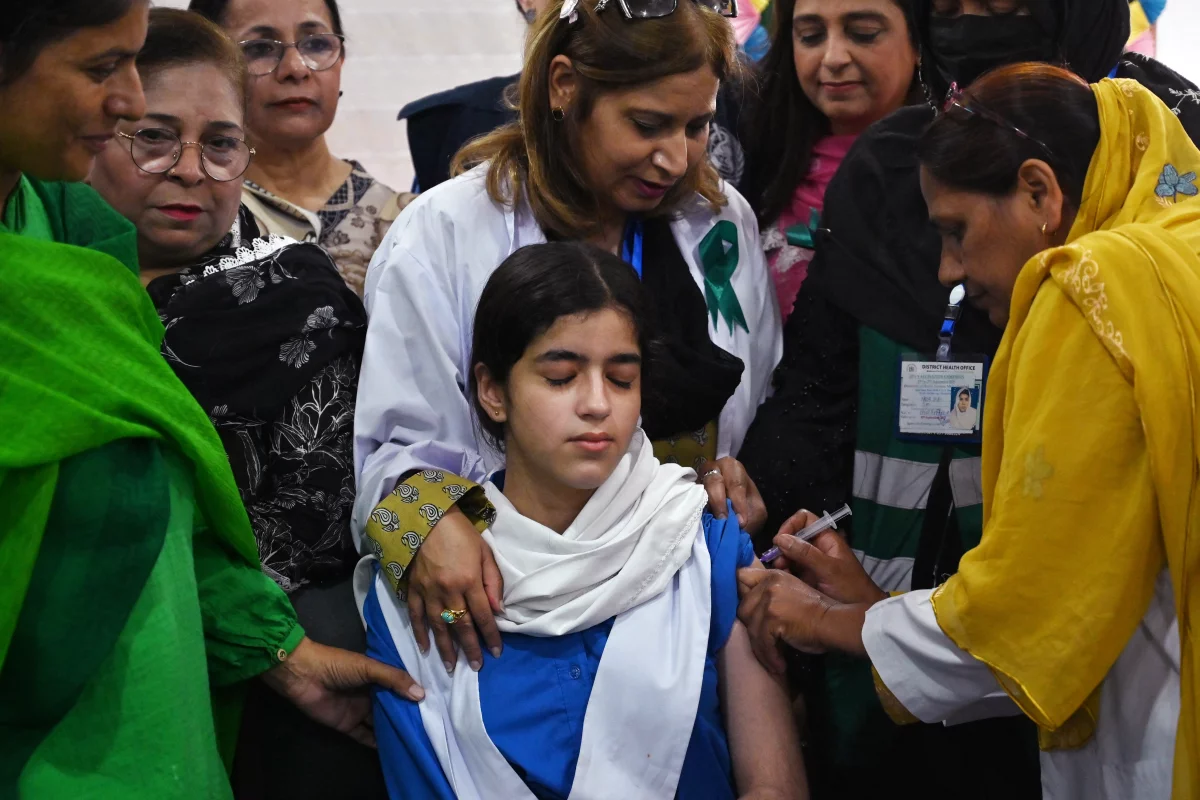
Has there been any good news on the global health front in 2025?
The year has been dominated by the unprecedented shakeup of U.S. aid, with the dissolving of the United States Agency for International Development (USAID) and dramatic cuts and freezes. These changes in the aid budget had a devastating impact on programs that fight disease, provide free health care and focus on maternal and child health. Other countries reset priorities and cut global health funding as well, including France, Germany and the United Kingdom.
The turmoil of this year raises deep concerns about the year ahead, with different perspectives on the impact of the Trump shakeup.
"It's been a brutal year," says Dr. Atul Gawande, former head of global health at USAID and a professor at Harvard Medical School. "We're now closing in on 700,000 people who are estimated to have died by any conservative measure as a result of USAID's shutdown. [We now expect] the first increase in in child mortality since the 1960s. It's a setback of staggering proportions."
State Department Principal Deputy Spokesperson Tommy Pigott responded to these characterizations by email, calling them "false conclusions" based on "inaccurate assumption" and pointing to "the groundbreaking global health strategy being implemented at the State Department ... fundamentally changing how the United States delivers assistance by helping governments build stable, self-sustaining health care systems within their own countries."
Yet amid the debate about the future of global health programs, there was consensus: It was year that saw notable progress. "There have been important successes," says Dr. Kate O'Brien of the World Health Organization.
Here are some of the high points in global health in 2025.
No country has met the goal of eliminating mother-to-child transmission of HIV, syphilis and hepatitis B — until this year. In October, the World Health Organization validated the Maldives for the hepatitis B part of this trifecta. In 2019, the South Asian island nation had been recognized for ending maternal transmission of the other two diseases.
"This historic milestone provides hope and inspiration for countries everywhere working towards the same goal," said WHO Director General Tedros Adhanom Ghebreyesus in a statement.
[Note: Elimination means reducing mother-to-baby transmission below a specific threshold for each disease – for example, an infection rate of less than 1% for hepatitis B Dr. Catharina Boehme of WHO's southeast Asia office, credited the "unwavering commitment toward universal health coverage" to all, "including migrants," as a key element in this achievement.
Just under the wire for a 2025 designation, in mid-December Brazil was validated by WHO for quashing transmission of HIV between mothers and children. It's the largest country in the Americas to do so.
"I've been in this work for 25 years and to think how far we've come — I really feel I've been part of witnessing one of the greatest public health achievements of the last 50 years," Anurita Bains tells NPR. The UNICEF associate director for HIV/AIDS, she was in Brazil for the announcement, marked by a celebration whose guests included the country's president, Luiz Inácio Lula da Silva.